
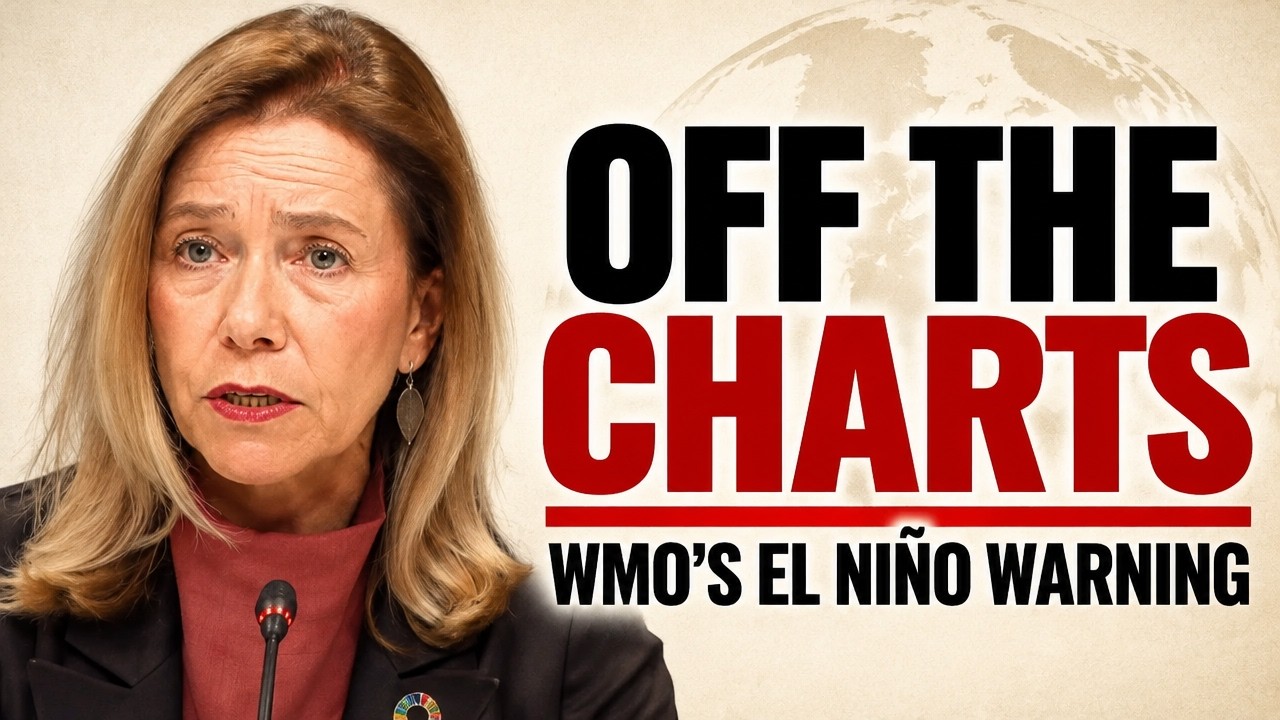
The World Meteorological Organization (WMO) has issued a stark warning regarding the 2026–2027 El Niño phenomenon, with Secretary-General Celeste Saulo describing it as “off the charts” during the COP31 summit. This comes as UN climate chief Simon Stiell cautioned that the world is becoming dangerously hot, urging global preparedness for potentially record-breaking temperatures in the coming years.
“Off the Charts” El Niño and Record Temperatures
Presenting the WMO’s State of the Climate Update 2026, Celeste Saulo highlighted that the past 12 years have been the warmest on record, with 2026 among the top four. Global average temperatures from January to September 2026 were approximately 1.47°C above pre-industrial levels. Saulo warned that the strong El Niño could further elevate temperatures for 2026 and, given its typical impact in the year following its development, 2027 could also see new records.
The current El Niño is distinct from previous events monitored by the WMO. Saulo explained that while an El Niño is declared when tropical equatorial Pacific sea-surface temperatures are 0.5°C above average, forecasts suggest this anomaly may reach nearly four times that threshold between November 2026 and January 2027.
Rising Seas and Human Health Crisis
The WMO update also revealed that ocean heat has reached its highest level on record for the tenth consecutive year, with sea-surface temperatures setting monthly records throughout 2026. Sea levels have also hit a record high, increasing risks for an estimated 900 million people residing along low-lying coasts. Heatwaves, tropical cyclones, and rainstorms are intensifying at rates exceeding historical baselines, overwhelming societal preparedness.
Millions faced extreme heat in 2026, leading to tens of thousands of excess deaths in Europe, alongside dangerous heatwaves across India, Pakistan, and large parts of Asia and North America. Simon Stiell cited an estimate of 50,000 heatwave deaths in Europe during the northern summer, also noting the impact of rising heat on pregnancy, newborns, and maternal health. He identified the continued burning of coal, oil, and gas, coupled with deforestation, as the primary drivers of this crisis.
Urgent Need for Early Warnings and Adaptation
Saulo reported an increase in countries implementing multi-hazard early warning systems, from 56 in 2015 to 136 in 2025. However, she stressed that these systems rely on sustained observations and data, calling for urgent COP31 decisions and funding. A significant gap exists between information and action: while three out of four meteorological services provide health information to ministries, only one out of four health ministries integrate climate information into decision-making. Warnings for heat, floods, and drought must translate into tangible action.
Alan Dangour, Director of Climate and Health at Wellcome, echoed this urgency, stating that the response to years of climate warnings has been insufficient. He advocated for placing people and health at the core of climate negotiations, proposing cleaner energy, electrification, and heat warning systems as vital measures to save lives and reduce costs. Dangour issued a stark warning about the limits of adaptation: “We cannot adapt to an unmitigated future,” emphasizing the extreme challenges of adapting to 2.7°C or 2.8°C of warming, particularly for vulnerable communities.
What is the WMO’s El Niño warning for 2026-2027?
The WMO Secretary-General Celeste Saulo described the 2026–2027 El Niño as “off the charts,” forecasting that sea-surface temperature anomalies in the tropical equatorial Pacific could reach nearly four times the typical El Niño threshold.
What are the projected impacts of this El Niño?
The strong El Niño could push global temperatures higher for 2026, with 2027 potentially becoming another record-breaking year. It is expected to intensify heatwaves, tropical cyclones, and rainstorms, contributing to record ocean heat and rising sea levels, which threaten 900 million people on low-lying coasts.
What actions are urged to address the climate crisis?
Experts call for urgent COP31 decisions and funding for early warning systems, better integration of climate information into health decision-making, and a shift towards cleaner energy and electrification. Alan Dangour warned that adaptation has limits, stressing that an “unmitigated future” cannot be adapted to.
