
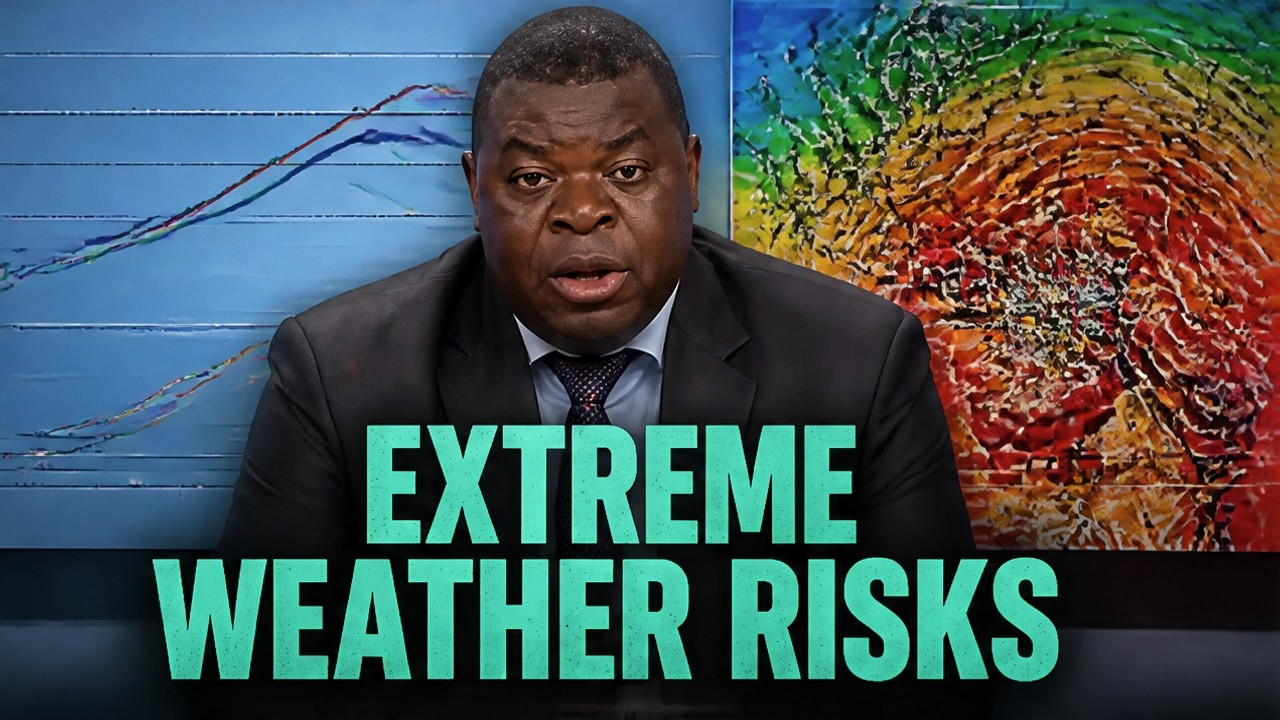
The World Meteorological Organization (WMO) has issued an unprecedented forecast, stating with nearly 100% certainty that a very strong El Niño event will persist through February 2027. This exceptionally high likelihood highlights the potential for global shifts in rainfall and temperature patterns, increasing risks of drought, flooding, and extreme heat worldwide.
WMO’s Unprecedented Certainty on El Niño
During a recent press briefing, WMO Secretary-General Celeste Saulo and Wilfrid Mafuma Okia, Chief of the Climate Prediction Section, presented the organization’s latest El Niño Update. Saulo highlighted the extraordinary nature of the forecast, stating, “This is the first time that we expressed such a degree of certainty.” The WMO expects El Niño to intensify into a very strong event, defined as an anomaly above +2°C, peaking towards the end of 2026. Sea-surface temperatures in the Niño 3.4 region already reached +2.6°C in August, with subsurface ocean temperatures in some areas around 8°C above normal. The average projected peak magnitude is around +3.6°C, though the exact timing and peak remain uncertain.
Global Impacts and Regional Outlooks
The WMO warns that the consequences of this prolonged El Niño could affect critical sectors including agriculture, food security, fisheries, health, energy, transport, water resources, trade, and disaster management. For the period of September to November, the seasonal outlook favors wetter-than-normal conditions across large parts of Africa and sections of South America. Conversely, drier-than-normal conditions are anticipated over areas such as the Indian subcontinent, Southeast Asia, Australia, Central America, and the Caribbean.
Europe’s Distinct Climate Situation
Notably, the WMO made an important distinction regarding Europe. When asked about the connection between El Niño and Europe’s recent heatwave, Mafuma Okia clarified that it was not related to El Niño but rather to a heat dome over the continent. While above-average temperatures are expected across much of the world in the coming months, the WMO has not established a firm link between El Niño and the likelihood of another European heatwave. Mafuma Okia emphasized that “El Nino changes the odds, the probability of climate condition,” but it is not a direct forecast of specific events like storms or heatwaves in individual locations.
Preparation and Long-Term Implications
Countries and international organizations are already implementing preparedness measures, ranging from drought and flood readiness to heat protection and agricultural planning. Secretary-General Saulo stressed the urgency, stating, “This exceptional El Nino demands exceptional preparation and response.” The WMO also cautions that the impacts may extend beyond the weakening of the El Niño event itself, with reduced rainfall potentially causing delayed effects on agriculture, hydropower, and water availability into 2027 and even 2028. Regional and national forecasts remain crucial for understanding local impacts.
What is the WMO’s latest El Niño forecast?
The WMO forecasts a nearly 100% likelihood that a very strong El Niño event will persist through February 2027, peaking towards the end of 2026.
How will El Niño affect Europe?
The WMO has not established a direct link between this El Niño event and future heatwaves in Europe, noting that the continent’s recent heatwave was due to a heat dome. While global temperatures are expected to be above average, specific impacts on Europe are not firmly linked to El Niño.
What are the potential global consequences?
The prolonged El Niño could impact agriculture, food security, fisheries, health, energy, transport, water resources, trade, and disaster management globally, with varied regional rainfall and temperature patterns.
