
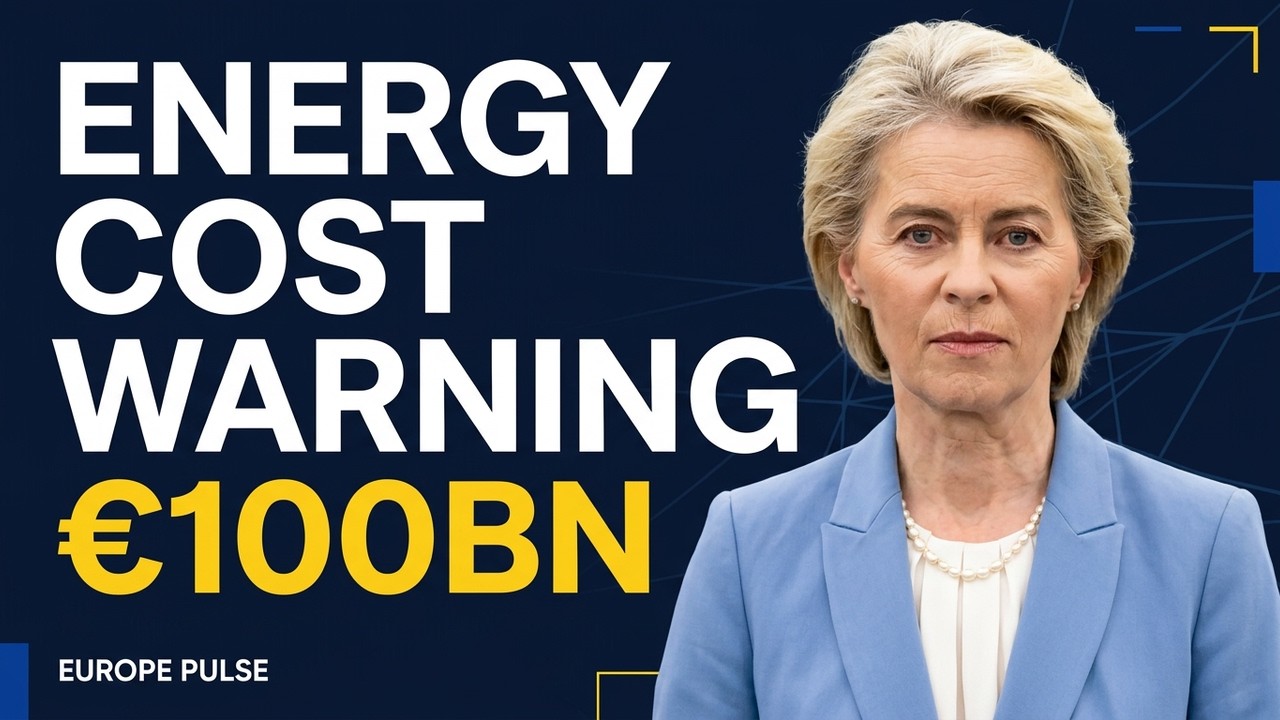
European Commission President Ursula von der Leyen has outlined Europe’s proposed response to the ongoing energy crisis, which sees gas prices up 140% and diesel prices doubled since late February. Ahead of the European Council meeting on 15–16 October 2026, von der Leyen detailed immediate support measures, a push for energy independence, and her case for the next EU long-term budget, as Europe faces an extra €100 billion in fossil fuel import costs.
Addressing Soaring Energy Costs
Von der Leyen addressed the significant increases in gas and diesel prices, alongside national differences in electricity costs, emphasizing the need for targeted assistance. She highlighted examples like energy vouchers for low-income households in France and Romania and announced plans to prolong temporary state aid for the most exposed industrial sectors. “We need to act now to protect those most in need,” von der Leyen stated, adding that “there should be no blanket handouts.”
Strengthening Energy Security and Joint Purchasing
To bolster energy security, von der Leyen discussed the G7 agreement to release 100 million barrels of diesel and crude oil. The Commission also plans a dialogue on European refineries and a new task force aimed at pooling energy demand. The objective is to move beyond simply matching buyers and suppliers towards joint procurement through a market operator, enhancing Europe’s collective purchasing power.
The Path to Energy Independence
Von der Leyen argued that Europe’s reliance on imported oil and gas makes it vulnerable to external shocks. Her longer-term strategy focuses on achieving energy independence through clean electricity produced within Europe, faster grid connections, and increased electrification of energy consumption. While Russian gas imports have already fallen from 45% to 12% of EU gas imports, von der Leyen set a goal of reducing this share to zero by year-end. Europe installed over 80 GW of renewable capacity last year, with six times that amount awaiting connection. The proposed Electrification Action Plan targets doubling electricity’s share of final energy consumption by 2040, which could potentially reduce fossil fuel imports by €260 billion annually. “We need to invest in our resilience,” she affirmed.
Future EU Budget Priorities
Linking these energy challenges to the next EU budget, von der Leyen defended continued investment in shared priorities such as defence, competitiveness, artificial intelligence, and energy infrastructure. The Commission’s proposal would preserve current funding levels for agriculture and cohesion, while increasing support for underfunded areas and crisis response. The proposed EU long-term budget amounts to 1.26% of EU gross national income, and von der Leyen warned against large cuts, supporting new own resources.
What is the current state of Europe’s energy costs?
Gas prices have risen by 140% since the end of February, and diesel prices have doubled. Europe faces an additional €100 billion in fossil fuel import costs.
What is Europe’s long-term strategy for energy independence?
The long-term strategy focuses on increasing clean electricity production within Europe, improving grid connections, and greater electrification of energy consumption, aiming to reduce reliance on imported fossil fuels and potentially save €260 billion annually.
How does the proposed EU budget address energy challenges?
The proposed EU long-term budget aims to support investments in energy infrastructure, defence, competitiveness, and artificial intelligence, while preserving funding for agriculture and cohesion. It seeks to increase support for underfunded priorities and crisis response.
