
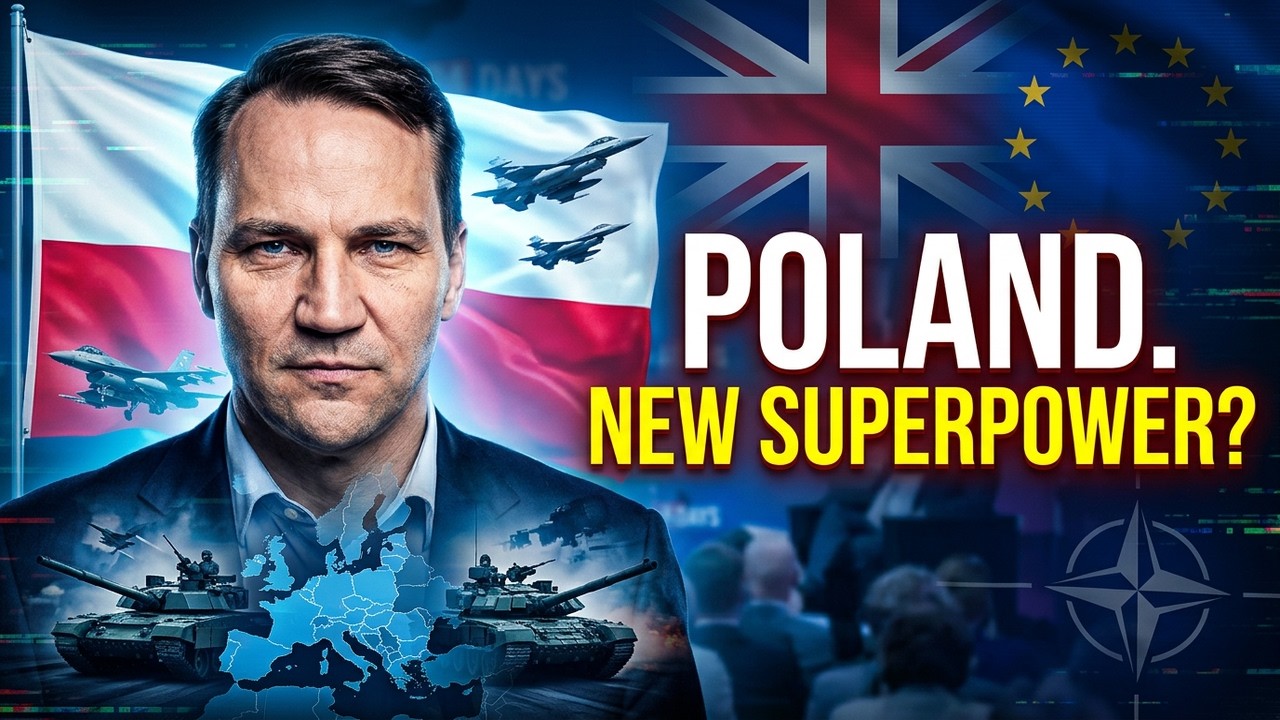
Sikorski Delivers Blistering Warning: Brexit Ignorance, Russian Sabotage & Europe’s Urgent Military Future
In a discussion that has sent ripples across Europe, Polish Foreign Minister Radosław Sikorski recently delivered a stunning and stark assessment of the continent’s geopolitical challenges. During a live fireside chat with security expert Edward Lucas on @DF24pl, Sikorski spoke with characteristic candour about the future of NATO, Europe’s military independence, Russian hybrid warfare, Ukraine’s battlefield innovations, and Britain’s post-Brexit reality. What made the discussion particularly unnerving was a dramatic, real-time illustration of the very threat Sikorski was discussing: a technical interruption that appeared to be a live act of Russian sabotage.
Live Interruption Highlights Europe’s Vulnerability to Hybrid Warfare
The conversation took an unexpectedly dramatic turn as Sikorski was detailing Russian-sponsored attacks, sabotage, and assassination attempts across Europe. Suddenly, the audio system was disrupted, leaving listeners momentarily in silence. The interruption, while sparking nervous jokes about Russian and Chinese interference, served as a chilling, live testament to Europe’s vulnerability to hybrid warfare. It underscored the insidious and pervasive nature of Kremlin attacks, not just in cyberspace or distant battlefields, but potentially within the very platforms meant to foster open discussion and democratic dialogue.
A Scathing Brexit Reality Check
Beyond the technical hiccup, Sikorski delivered one of the sharpest critiques of Brexit to date. He argued forcefully that Britain fundamentally failed to comprehend the intricate workings of the European Union, illustrating a profound misunderstanding of the bloc’s mechanisms and spirit. More critically, he issued a stark warning: the United Kingdom would never again be able to negotiate the “à la carte” deal it once enjoyed as a member state. This unequivocal statement leaves little room for ambiguity regarding the future relationship between the UK and the EU, highlighting the enduring consequences of its departure.
Navigating NATO’s Uncertain Future and the Call for European Autonomy
A central theme of the discussion revolved around the future of NATO, particularly under the specter of a potential second Donald Trump presidency. Sikorski openly addressed fears of NATO disintegration and the critical need for Europe to significantly bolster its own defense capabilities, potentially even to the point of defending itself without the full backing of the United States. This call for greater European military independence is not merely aspirational but framed as an urgent necessity in an increasingly volatile global landscape. Discussions also touched on crucial matters such as European defense spending, urging member states to meet and exceed their commitments.
Ukraine’s Battlefield Innovations: A Blueprint Against Russian Aggression
Sikorski offered profound insights into Ukraine’s ongoing struggle against Russia, specifically highlighting the revolutionary advancements in drone warfare. He detailed how Ukraine’s innovative use of unmanned aerial vehicles (UAVs) and its capability to execute deep strikes inside Russian territory are reshaping modern combat. These lessons, he suggested, are invaluable for European nations seeking to fortify their own defenses against similar hybrid and conventional threats from Moscow.
Poland’s Ascent and the Shifting European Security Landscape
The Polish Foreign Minister also shed light on his country’s burgeoning role as a military power within Europe. He discussed initiatives like the Three Seas Initiative and the concept of “Tank Schengen,” aimed at facilitating rapid military movement across borders, underscoring Poland’s commitment to regional security. The conversation also delved into the complex dynamics of Visegrad politics, acknowledging the divergent stances of leaders like Robert Fico and Viktor Orbán, and their implications for broader European cohesion.
Beyond the Headlines: Crucial Conversations for Europe’s Future
The discussion cast a wide net, covering a multitude of critical topics that will define Europe’s trajectory:
- NATO’s future under Donald Trump: A recurring concern about the reliability of the transatlantic alliance.
- Poland’s growing military power: Its strategic importance as a bulwark on NATO’s eastern flank.
- Ukraine’s drone warfare revolution: A testament to innovation in the face of aggression.
- Russia’s hybrid attacks on Europe: From cyber warfare to direct sabotage and disinformation campaigns.
- Visegrad politics and Robert Fico: The challenges to unity posed by certain regional leaders.
- European defense spending: The imperative for increased investment and coordination.
- Britain’s possible return to the EU: A prospect Sikorski’s earlier comments suggested was highly improbable in its former ‘à la carte’ form.
- Poland’s political polarization: An acknowledgment of internal challenges despite its strong foreign policy stance.
A Must-Watch Discussion for Geopolitical Observers
For anyone invested in geopolitics, NATO strategy, European defense, or the future of the EU, Radosław Sikorski’s recent discussion stands out as one of the most revealing and essential analyses of the year. His unfiltered warnings, dramatically underscored by a live disruption, paint a vivid picture of the complex, dangerous, and urgent challenges facing Europe today.
#EuropePulse #Sikorski #NATO #Brexit #Poland #Russia #Ukraine #EuropeanSecurity
