
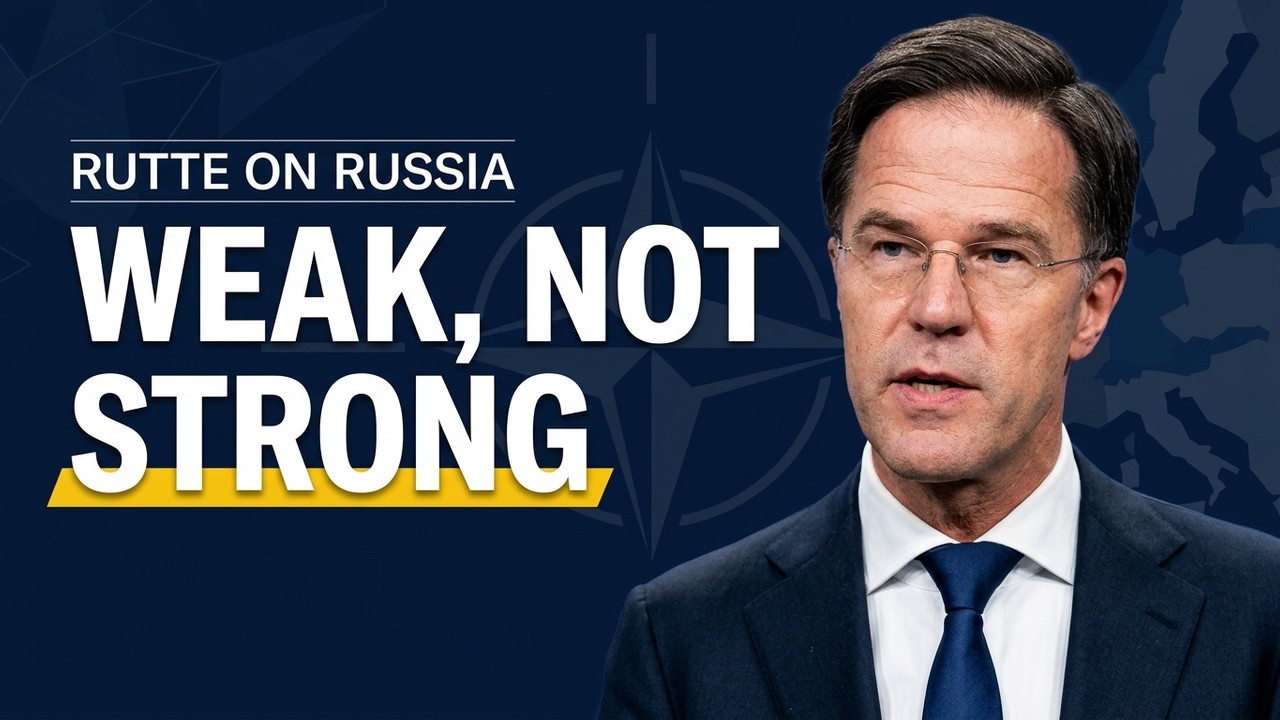
NATO Secretary General Mark Rutte, speaking at TalTech in Tallinn, Estonia, on 14 October 2026, asserted that Russia’s attacks demonstrate weakness and desperation. While stating there is “no imminent military threat to NATO territory,” Rutte warned that Russia remains a long-term threat, calling for stronger defences, continued support for Ukraine, and unity between Europe and North America.
Strengthening NATO’s European Pillar
Rutte outlined a vision for “NATO 3.0,” where European allies and Canada would assume greater responsibility for shared security, reinforcing the transatlantic partnership. He recalled the commitment made at the 2025 Hague summit for allies to invest 5% of annual GDP in defence by 2035. Rutte praised Estonia for already surpassing this target, spending 5% on core defence, and highlighted its innovation in drones, air defence interceptors, cybersecurity, and AI-enabled systems.
He reaffirmed NATO’s Article 5 commitment to collective defence, particularly to Estonia, stating that allies would detect and respond to any threatening military build-up.
Civil Resilience and Hybrid Threats
Beyond military forces, Rutte stressed the importance of civil preparedness. He commended Estonia’s Defence League volunteers, survival skills, and media literacy, recalling a 1982 student protest during the Soviet occupation that used humour to express resistance. He emphasized that security rests on investment, innovation, industry, and civil resilience.
Addressing hybrid attacks, Rutte maintained that NATO’s response thresholds would remain deliberately ambiguous. He urged allies to attribute attacks and share information, noting that responses might not be public or follow a simple tit-for-tat pattern. He cited initiatives like Baltic Sentry, “which the Russians hate and therefore I love,” and action against Russia’s shadow fleet as examples of NATO’s approach. On navigation interference affecting merchant ships, he called for information sharing, coordination, and national responsibilities for maritime safety.
NATO-EU Cooperation and Ukraine Support
Rutte described NATO and the EU as complementary entities. NATO provides military command, planning, and standards, while the EU contributes through funding, industry, resilience, and military mobility. He cautioned against duplicating command structures if a unified European military were to emerge, which would require states to surrender responsibility for separate national forces.
He underscored that Ukraine’s survival as a sovereign, independent country serves both Ukrainian and NATO interests. Rutte noted that learning is mutual, with NATO gaining drone expertise from Ukraine and sharing battlefield insights, stating, “we are learning from Ukraine.” He rejected the notion of a transatlantic split, arguing that NATO benefits US security as well as Europe’s, acknowledging that building greater European capabilities would take time.
What is NATO 3.0?
NATO 3.0 is Mark Rutte’s vision for the alliance, where European allies and Canada take on greater responsibility for shared security, strengthening the transatlantic partnership.
What is the defence spending target Rutte mentioned?
Mark Rutte recalled the commitment made at the 2025 Hague summit for allies to invest 5% of annual GDP in defence by 2035.
How does NATO respond to hybrid attacks?
NATO’s response thresholds to hybrid attacks are kept deliberately ambiguous, focusing on attributing attacks, sharing information, and coordinating responses that may not always be public or follow a simple tit-for-tat pattern.
