
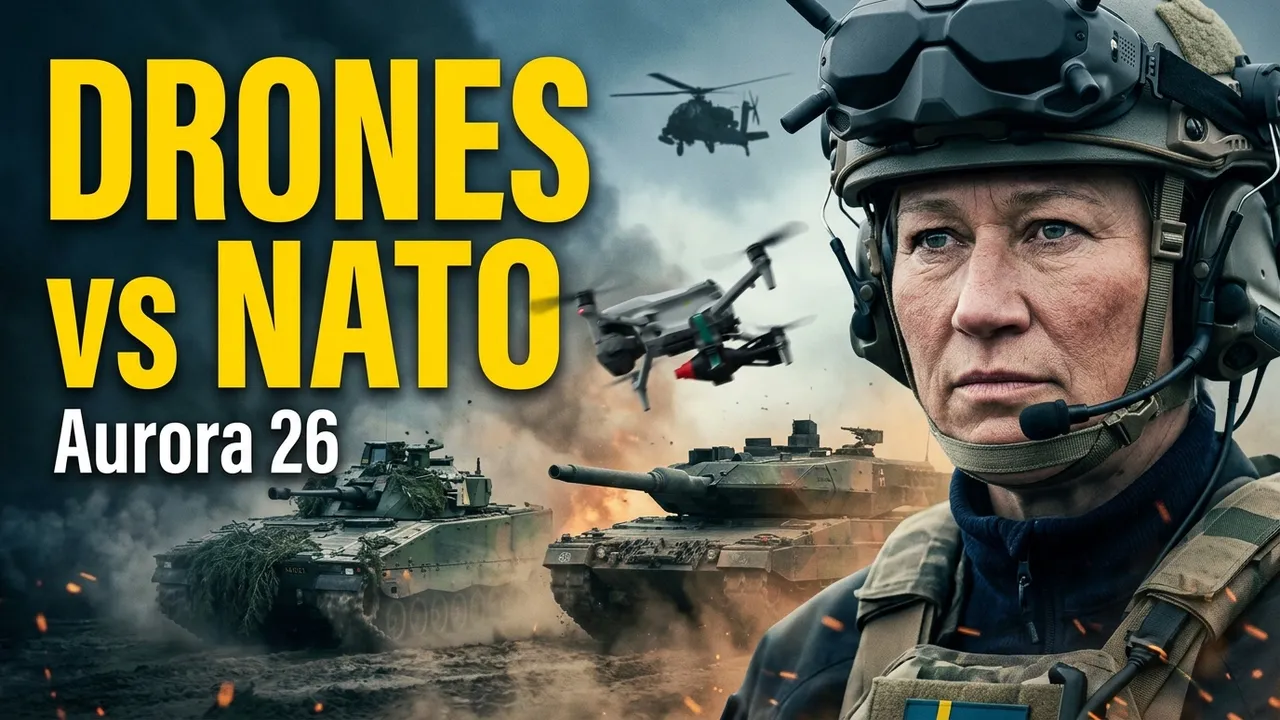
“One Plus One Is Three”: Sweden’s NATO Transformation Unveiled at Aurora 26
Sweden, NATO’s newest member, is no longer merely observing but actively shaping the future of warfare. This dramatic strategic pivot is on full display during Exercise Aurora 26, one of Northern Europe’s largest military drills, involving over 18,000 troops from 13 allied nations. At the heart of this transformation are Ukraine’s battle-tested drone operators, whose invaluable experience is rewriting NATO doctrine, battlefield tactics, and defense planning across Europe.
The exercise reveals how rapidly modern battlefields are evolving, where low-cost FPV (First Person View) drones and sophisticated reconnaissance systems, honed in the crucible of the war in Ukraine, can challenge even the most advanced military platforms. As Swedish Navy Vice Admiral Ewa Skoog Haslum, Chief of Joint Operations, eloquently put it, Sweden is now “part of the game,” underscoring a profound military and cultural shift.
Ukraine’s Drone Veterans Forge NATO’s Future
During Aurora 26, Ukrainian drone teams are working side-by-side with the Swedish Armed Forces, simulating attacks against high-value targets like Swedish CV-90 infantry fighting vehicles and Leopard 2 tanks. In a rare and critical move, some units are deliberately deployed without anti-drone protection systems. This calculated vulnerability allows NATO planners to meticulously study the full, unmitigated impact of drone warfare on armored vehicles and frontline troops, providing real-world data crucial for future defense strategies.
The collaboration highlights the immediate lessons learned from Ukraine. The agility and destructive potential of FPV drones, operated by battle-hardened veterans, underscore the imperative for rapid adaptation within NATO. Footage from the exercise (00:07, 00:42) shows Ukrainian and Swedish operators meticulously preparing and deploying these formidable tools, illustrating the hands-on nature of this critical training. The simulated engagements (02:18, 02:55) vividly demonstrate the challenges conventional forces face against these airborne threats.
Sweden’s Strategic Pivot: From Observer to Player
Aurora 26 marks a monumental shift for Sweden after its recent entry into NATO. The exercise’s focus has expanded beyond merely defending Swedish territory to protecting the entire Alliance and reinforcing NATO’s vital eastern flank, notably including Latvia. This strategic reorientation sees Swedish troops training for complex multinational deployments alongside allies, fostering seamless interoperability crucial for collective defense.
The integration of forces is comprehensive. Dutch AH-64 Apache helicopters (03:25), armored formations, and advanced NATO interoperability protocols are being rigorously tested in real-time scenarios, all shaped by the harsh realities and lessons gleaned from Ukraine. Vice Admiral Ewa Skoog Haslum’s statement (03:47) encapsulates this transformation: Sweden is embracing its role, shedding its traditional neutrality to become an active and integral participant in Europe’s security architecture.
The New Battlefield: Lessons from Aurora 26
The collective experience at Aurora 26 is painting a clear picture of the modern battlefield: one defined by the pervasive threat of drones, hybrid warfare tactics, and the absolute necessity for rapid adaptation. The exercise underscores that the future of warfare demands a constant re-evaluation of defense strategies, prioritizing agility, technological integration, and collective intelligence.
Sweden’s transformation is not an isolated event but a microcosm of a broader reality across Europe. NATO’s newest members are swiftly adapting to an era where collective defense is paramount, and innovative, often low-cost, technologies are reshaping military power dynamics. Aurora 26 isn’t just a military exercise; it’s a blueprint for NATO’s future, a testament to its evolving resilience, and a powerful demonstration of the collective strength that arises when allies truly become “part of the game.” The phrase “one plus one is three” perfectly encapsulates this synergy, where the combined forces and shared lessons yield a defense capability greater than the sum of its parts.
