
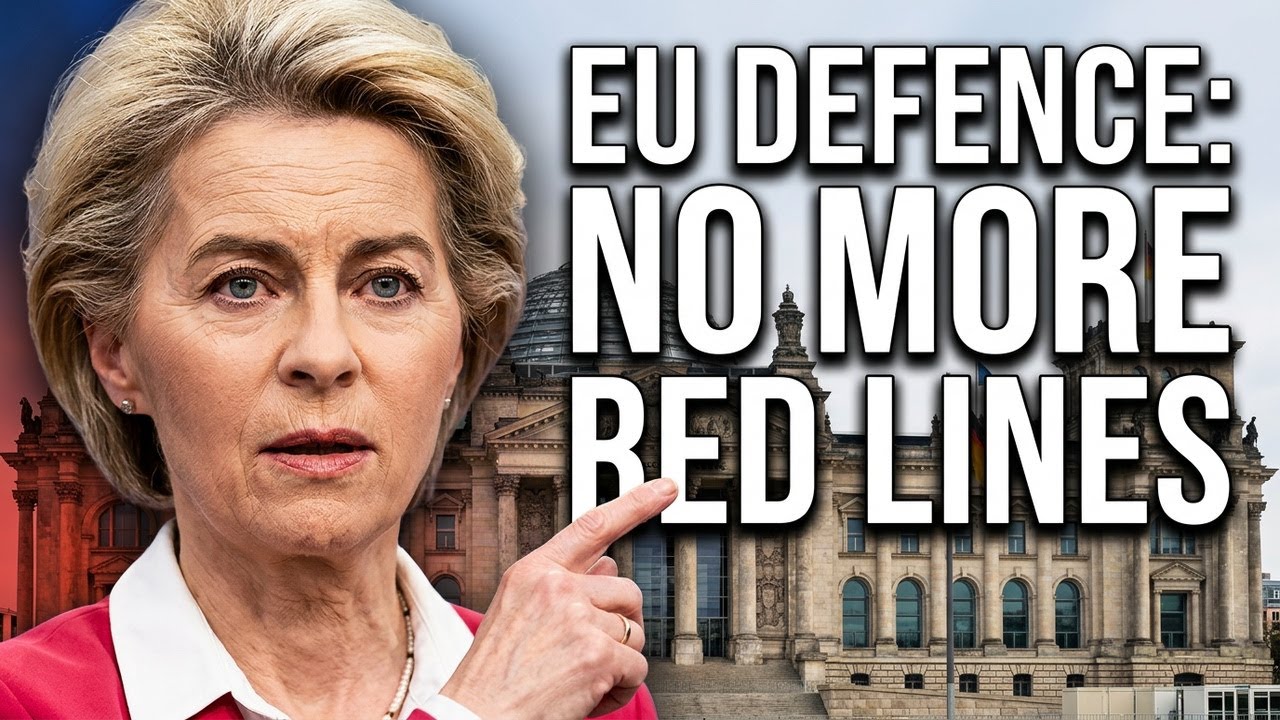
BRUSSELS/BERLIN – European Commission President Ursula von der Leyen delivered a potent and wide-ranging address at the CDU/CSU retreat at the EUREF Campus in Berlin, alongside prominent figures Jens Spahn and Alexander Hoffmann. Her speech, a strategic blueprint for the bloc’s future, has sent ripples across EU capitals, framing nuclear energy, defence, and trade as the defining pillars of Europe’s next decade. Von der Leyen’s stark warnings about rising geopolitical tensions and economic vulnerabilities are poised to reshape the discourse in Brussels and beyond.
A Continent at a Crossroads: Geopolitical Warnings from Berlin
Von der Leyen painted a sobering picture of a Europe navigating an increasingly perilous global landscape. The ongoing Middle East crisis and instability surrounding the vital Strait of Hormuz were highlighted as direct threats, not just to global peace, but to Europe’s economic stability and energy security. Her message was clear: the era of complacency is over, and the EU must urgently adapt to a new geopolitical reality marked by sustained pressure on energy prices and disrupted supply chains.
The Commission President underscored the imperative for Europe to bolster its strategic autonomy and resilience. This involves a multifaceted approach, from revitalising internal markets to forging new international partnerships and, critically, rethinking the continent’s energy and defence strategies.
Revitalising European Competitiveness and Global Trade
At the core of von der Leyen’s economic vision is a renewed push for European competitiveness. She stressed that a stronger economy is the bedrock of a secure and independent Europe.
* **Expanding the Single Market:** The speech emphasised the need for further integration and harmonisation within the EU single market, seen as Europe’s greatest economic asset. This includes dismantling remaining barriers and fostering a truly borderless economic area for goods, services, capital, and people.
* **Cutting Bureaucracy:** A significant focus was placed on streamlining regulations and reducing administrative burdens that hinder businesses, particularly SMEs and startups. The goal is to create a more agile and responsive regulatory environment.
* **”EU Inc” Framework:** To foster innovation and entrepreneurship, von der Leyen unveiled the concept of an “EU Inc” framework. This initiative aims to provide enhanced support and a more coherent ecosystem for startups and scale-ups across all 27 member states, enabling them to grow and compete globally.
* **Global Trade Agreements:** The importance of robust global trade agreements was reiterated, with a specific mention of Mercosur. These agreements are crucial for securing diverse supply chains, reducing dependence on single sources, and ensuring access to critical raw materials and markets.
The Nuclear Renaissance and Energy Independence
One of the most striking elements of von der Leyen’s address was her unequivocal call for a comprehensive overhaul of Europe’s energy strategy, pivoting towards greater independence and a diversified energy mix that explicitly includes nuclear power.
* **Reduced Reliance on Imported Fossil Fuels:** The speech underscored the critical need to break free from the volatility of imported fossil fuels, a vulnerability starkly exposed by recent geopolitical events. This transition is framed not just as an environmental imperative but a strategic necessity for energy security.
* **Renewables and Nuclear Power Mix:** Von der Leyen advocated for a pragmatic energy strategy that combines aggressive investment in renewable energy sources with a renewed commitment to nuclear power. This dual approach is seen as the most reliable path to achieving carbon neutrality while ensuring stable and affordable energy supplies.
* **Investment in Small Modular Reactors (SMRs):** A key element of the nuclear strategy involves significant investment in Small Modular Reactors (SMRs) across Europe. These advanced nuclear technologies are touted for their potential to offer safer, more flexible, and more cost-effective nuclear energy solutions, capable of being deployed more rapidly than traditional large-scale plants.
* **Boosting European Energy Sovereignty:** The overall objective is to enhance Europe’s energy sovereignty, insulating the continent from external shocks and geopolitical leverage.
Strengthening Europe’s Defence Shield
In a direct response to the escalating global security challenges, von der Leyen issued an urgent call for strengthening European defence capabilities, invoking Article 42.7 of the Treaty on European Union. This article mandates that if a Member State is the victim of armed aggression on its territory, the other Member States have an obligation of aid and assistance by all the means in their power.
* **Urgency of Collective Defence:** The speech highlighted the imperative for the EU to develop a robust and coherent defence strategy, moving beyond fragmented national efforts. This includes fostering greater interoperability, joint procurement, and shared strategic planning.
* **Addressing Critical Gaps:** Von der Leyen specifically pointed to critical shortcomings that need immediate attention. These include:
* **Air Defence:** The need for a more integrated and capable European air defence system to protect against evolving aerial threats.
* **Cyber Capabilities:** Strengthening collective cybersecurity defences to counter state-sponsored attacks and protect critical infrastructure.
* **Drone Technology:** Investing in and developing advanced drone technology, both for defensive and surveillance purposes, to ensure Europe remains at the cutting edge of modern warfare.
* **Building a Stronger European Security Architecture:** The vision articulated is one where Europe takes greater responsibility for its own security, complementing NATO efforts and ensuring the continent’s ability to respond effectively to a spectrum of threats.
Implications for Brussels and Beyond
Von der Leyen’s Berlin address marks a critical inflection point, effectively setting the agenda for EU policy on energy, trade, and geopolitics for the foreseeable future. Her comprehensive vision will undoubtedly fuel intense debate within the European Parliament, among member states, and in the corridors of Brussels.
The emphasis on nuclear power signals a significant shift in energy policy discussions, potentially galvanising a new wave of investment and cooperation. Similarly, the urgent call for a stronger, more unified European defence postures the continent for increased military spending, joint projects, and deeper strategic integration.
As Europe grapples with an evolving global order, von der Leyen’s warnings from Berlin serve as a powerful catalyst, urging the Union to embrace decisive action and forge a path towards greater competitiveness, energy independence, and defence autonomy. The coming months will reveal how swiftly and effectively these ambitious proposals translate into concrete policy and tangible change across the continent.
Stay updated with the latest European news, policy analysis, and geopolitical developments by following europepulse.eu.
