
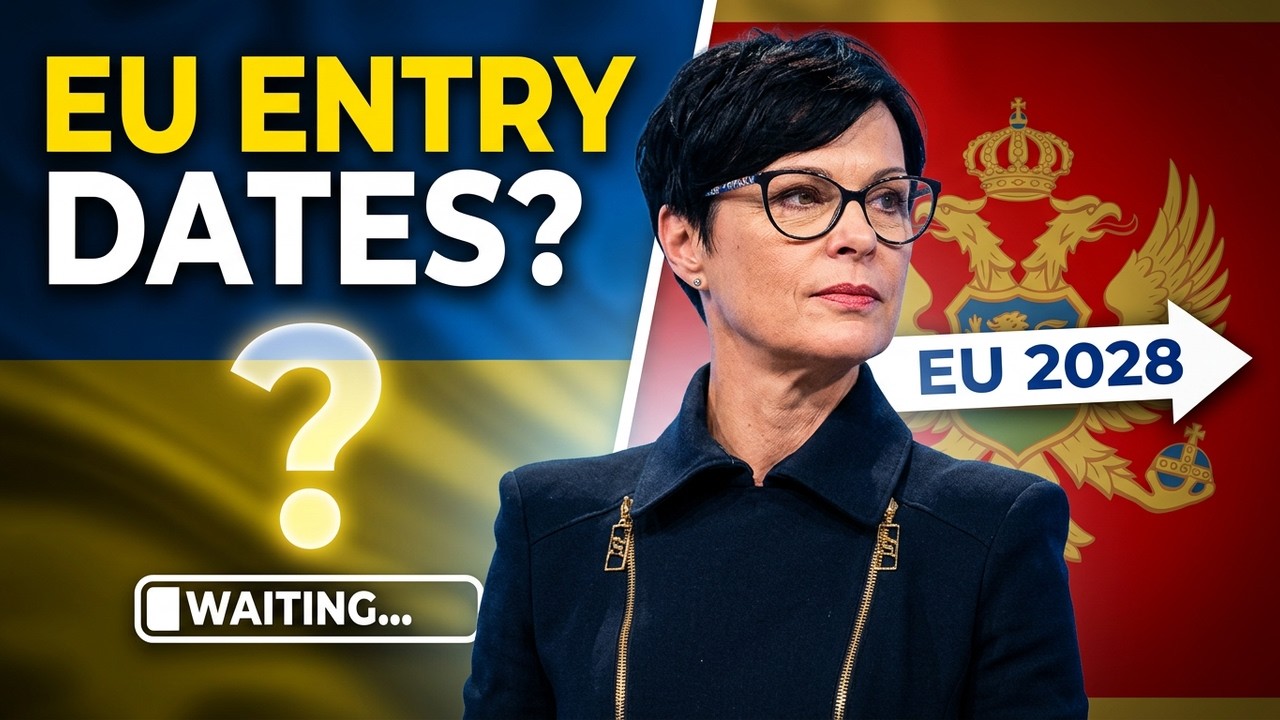
Montenegro is making significant strides towards European Union membership, with a potential accession treaty signing as early as June 2027, according to European Commissioner for Enlargement Marta Kos. This progress contrasts sharply with Ukraine, which despite ongoing reforms amid Russia’s war of aggression, still has no definitive entry date into the bloc. The differing paths highlight the merit-based nature of the enlargement process, as discussed by Commissioner Kos and EU High Representative Kaja Kallas.
Montenegro’s Path to EU Membership
Commissioner Kos indicated that Montenegro has met the conditions to close its remaining negotiating chapters and could conclude accession negotiations by the end of 2026. Work on its accession treaty is already underway, outlining a conditional timetable towards becoming the EU’s 28th member in 2028, with a possible treaty signing in June 2027. Kos emphasized that this remains a conditional timetable, not a final accession decision, requiring approval and ratification by member states.
Ukraine’s Reforms Amid Conflict and Security Contributions
Despite the challenges of Russia’s war, Ukraine continues its reform efforts. Kos expects the remaining negotiating clusters to open by year-end, supported by a joint task force launched in October for rule-of-law and anti-corruption reforms. A further benchmark assessment is envisaged in the first half of 2027. However, Kos stated, “we can’t say when Ukraine will be able to enter the EU.”
EU High Representative Kaja Kallas highlighted Ukraine’s crucial role in European security. “Ukraine is Europe’s first line of defense against Russia,” Kallas asserted, adding that “enlargement is direct investment in Europe’s security.” She also noted that Moldova and Western Balkan partners contribute to EU missions and efforts against foreign information manipulation, warning that delaying membership for deserving countries could foster instability.
Progress and Challenges Across Other Candidates
- Moldova: Kos praised Moldova’s rapid reforms, stating, “Moldova is leaping forward.” The Commission assesses it meets conditions to open all remaining clusters, with potential to close up to 25 chapters in 2027, dependent on continued reforms and rule-of-law benchmarks.
- Albania: Albania has opened all negotiating clusters in just over a year and provisionally closed its first four chapters. Sustaining this pace requires an independent judiciary, media freedom, fundamental rights, and practical results from legislation.
- Serbia: While Serbia shows alignment with EU law in several areas, it has slipped backwards on fundamental rights, freedom of expression, public administration, and academic freedom. Kos sees an opportunity for the new government to reverse this trend.
- Kosovo: Stable institutions and reforms are needed. All 27 member states must agree to ask the Commission for an opinion on its membership application. Amendments concerning the Kosovo Specialist Chambers risk undermining progress.
- Georgia: Georgia’s accession path can resume if its authorities return to democracy, the rule of law, and respect for fundamental rights.
What is the current status of Montenegro’s EU membership bid?
Montenegro has met conditions to close its remaining negotiating chapters and could conclude accession negotiations by the end of 2026, with a possible accession treaty signing in June 2027 and potential membership in 2028. This timetable is conditional and requires ratification by member states.
Does Ukraine have an EU entry date?
No, Ukraine currently has no definitive EU entry date. While reforms continue, European Commissioner Marta Kos stated that a specific timeline for accession cannot be provided at this time.
How does the EU assess accession speed?
Accession speed is strictly merit-based, meaning progress follows each country’s reform performance. This principle explains the varying timetables and conditions for different candidate countries.
