
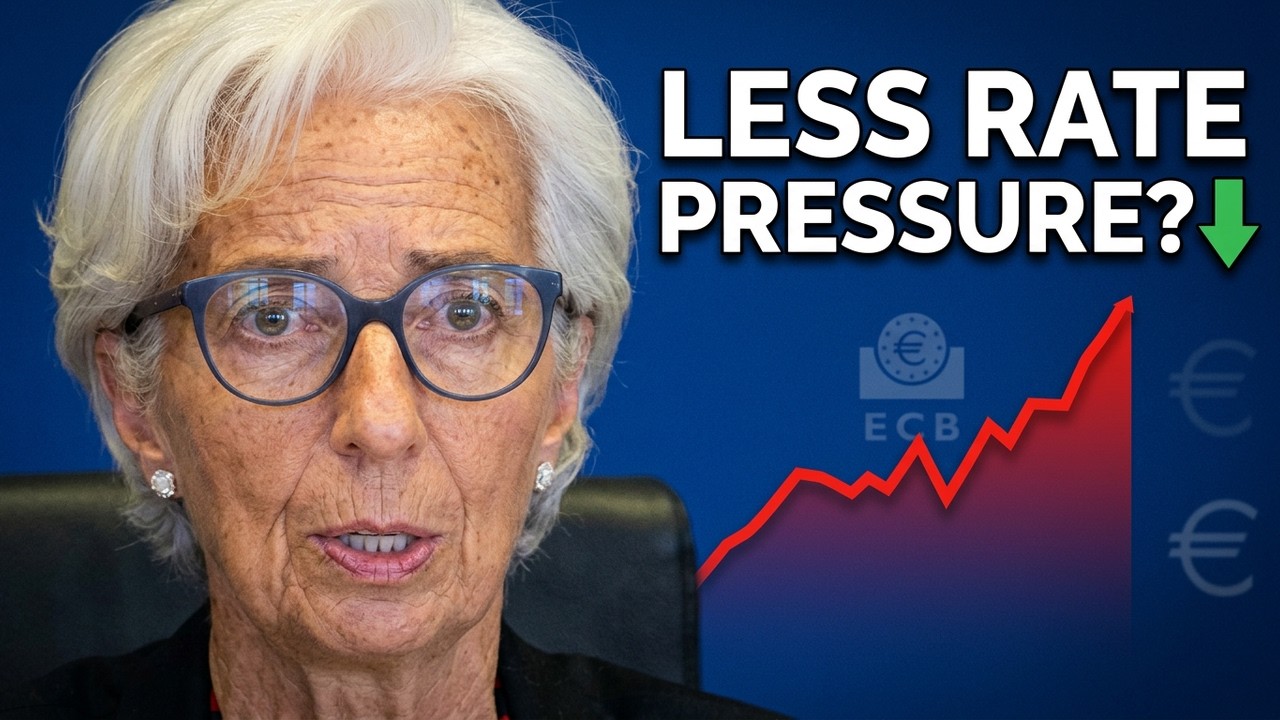
Christine Lagarde, President of the European Central Bank (ECB), has indicated that the immediate need for aggressive interest rate increases has lessened, despite inflation remaining above the Bank’s 2% target. Speaking at the European Parliament, Lagarde emphasized the ECB’s data-dependent approach amidst geopolitical tensions and energy shocks.
What happened
During a Monetary Dialogue focused on monetary policy under geopolitical tension and repeated supply shocks, Lagarde addressed Members of the European Parliament. She reviewed the euro area economy, inflation trends, and energy prices, noting that while the euro area faces a serious energy-driven shock from the Middle East war, there is “no evidence yet of second-round effects strong enough to justify a tougher policy response.”
The ECB recently raised its three key interest rates by 25 basis points at its June meeting. Lagarde explained the ECB’s strategy of staying data-dependent and making decisions meeting-by-meeting, rather than committing to a fixed rate path. She explicitly stated, “We are not pre committed to any particular rate path.”
Inflation Trends and Projections
Lagarde highlighted that euro area inflation rose to 3.2% in May from 3% in April, with energy inflation exceeding 10% in both months. Inflation excluding energy and food also rose to 2.6% in May. However, she stressed that longer-term inflation expectations remain anchored around 2%. The ECB does not currently observe wage-price dynamics or de-anchored expectations that would necessitate a more forceful response.
ECB staff projections anticipate headline inflation at 3% in 2026, 2.3% in 2027, and 2% in 2028. Real GDP growth is projected at 0.8% in 2026, 1.2% in 2027, and 1.5% in 2028.
Why it matters for Europe
The ECB’s cautious stance aims to balance the imperative of keeping eurozone inflation anchored with the desire to avoid an unnecessarily harsh response to external energy shocks. Lagarde’s remarks suggest a nuanced approach, acknowledging external pressures while closely monitoring domestic inflation dynamics. This strategy is crucial for maintaining economic stability across the euro area. As Lagarde put it, “The central bank cannot reopen the Strait of Hormuz. Let’s be clear.” She added, “This does not mean that we can be complacent,” asserting that “The ECB is well equipped to meet this challenge.”
Key points
- Christine Lagarde spoke at the European Parliament during a Monetary Dialogue.
- The ECB raised its three key interest rates by 25 basis points at its June meeting.
- Euro area inflation rose to 3.2% in May from 3% in April.
- Energy inflation was above 10% in both April and May.
- Inflation excluding energy and food rose to 2.6% in May.
- ECB staff projections see headline inflation at 3% in 2026, 2.3% in 2027 and 2% in 2028.
- Real GDP growth is projected at 0.8% in 2026, 1.2% in 2027 and 1.5% in 2028.
- Lagarde says the ECB is not committed to any specific future rate path.
FAQ
What did Christine Lagarde say about ECB rate hikes?
Christine Lagarde indicated that the need for a more forceful increase in ECB interest rates has eased, despite inflation remaining above the 2% target.
Why is the ECB considering a less aggressive approach?
Lagarde noted that while the euro area faces an energy-driven shock, there is no strong evidence yet of second-round inflation effects that would justify a tougher policy response.
What is the ECB’s current strategy for interest rates?
The ECB is staying data-dependent and making decisions meeting-by-meeting, rather than committing to a fixed rate path, to adapt to evolving economic conditions.
