
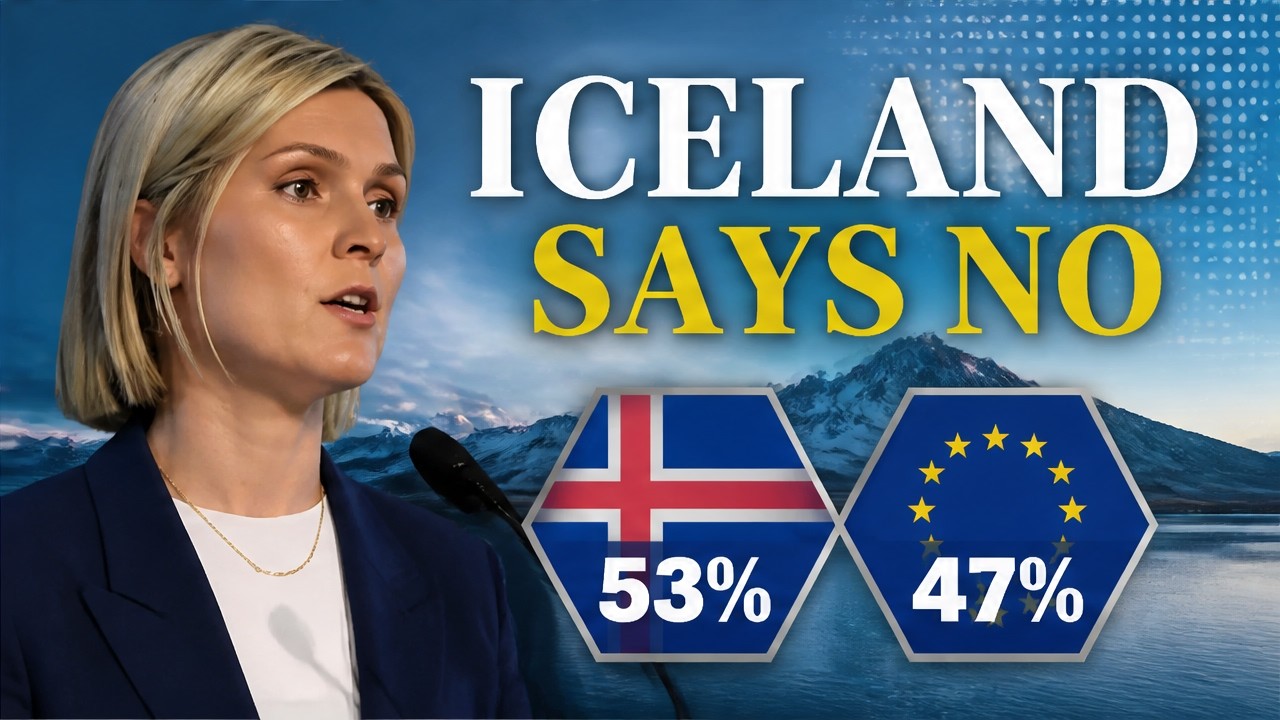
Icelandic Prime Minister Kristrún Frostadóttir has declared the country’s decision not to resume European Union accession negotiations a “victory for democracy,” following a referendum with over 80% participation. The narrow vote, with approximately 53% against and 47% in favour of continuing talks, effectively puts Iceland’s EU accession process on hold for the current government term.
Referendum Outcome and PM’s Stance
Prime Minister Frostadóttir emphasized that the high turnout gives her government a clear mandate to respect the result. She stated, “I don’t see this as a setback. I see this as a victory for democracy.” The government will not continue accession negotiations during its current term, honouring its promise to let Icelanders decide on the matter.
The referendum closes the door, for now, on restarting EU accession talks that initially began following the financial crisis in 2009–2010 and had been suspended for around 13 years. Frostadóttir confirmed, “This government is not going forward with the accession talks this term.”
Focus on the EEA and Existing Ties
Despite the divided opinion, Frostadóttir noted that a majority of voters appear satisfied with Iceland’s present European arrangements. She stated, “A majority of the country is happy with the situation we have right now.” Her government now intends to focus on strengthening Iceland’s existing relationship with the EU through the European Economic Area (EEA) agreement, alongside Norway and Liechtenstein. “We will continue with the EEA agreement but we will not go further with accession talks,” she affirmed.
The Prime Minister also highlighted Iceland’s broader international framework, including NATO, its bilateral defence agreement with the United States, and other bilateral ties, as crucial for the country’s security and economic position.
Broader Debates and Future Steps
The referendum campaign saw Icelanders engage in extensive debates on issues beyond just EU membership, including sovereignty, fisheries, agriculture, trade, currency, interest rates, inflation, defence, and hybrid threats. Frostadóttir underscored the unique position of Iceland, stating, “We’re not mainland Europe. We’re an island country. We’ve survived off of fisheries for a long time.”
The result garnered attention internationally, with figures like Marine Le Pen of France’s National Rally and Nigel Farage of Reform UK welcoming the Icelandic vote as a demonstration of national sovereignty.
While the referendum does not formally withdraw Iceland’s existing EU application, Prime Minister Frostadóttir did not announce its formal withdrawal. She indicated that parliament would discuss the future of the application, leaving open the possibility of the issue returning in the longer-term future.
FAQ
What was the outcome of Iceland’s EU accession referendum?
Approximately 53% of Icelanders voted against resuming EU accession negotiations, while roughly 47% supported continuing the talks. The referendum saw more than 80% participation.
What is the Icelandic government’s immediate plan regarding EU accession?
Prime Minister Kristrún Frostadóttir has stated that her government will not restart accession talks during its current term. Instead, it will focus on strengthening Iceland’s existing relationship with the EU through the European Economic Area (EEA) agreement.
Does the referendum formally withdraw Iceland’s EU application?
No, the referendum does not formally withdraw Iceland’s EU application. Prime Minister Frostadóttir indicated that parliament would discuss the future of the application.
