I Got a Christmas Card From Trump: Kaja Kallas Reveals Europe’s Brutal Reality
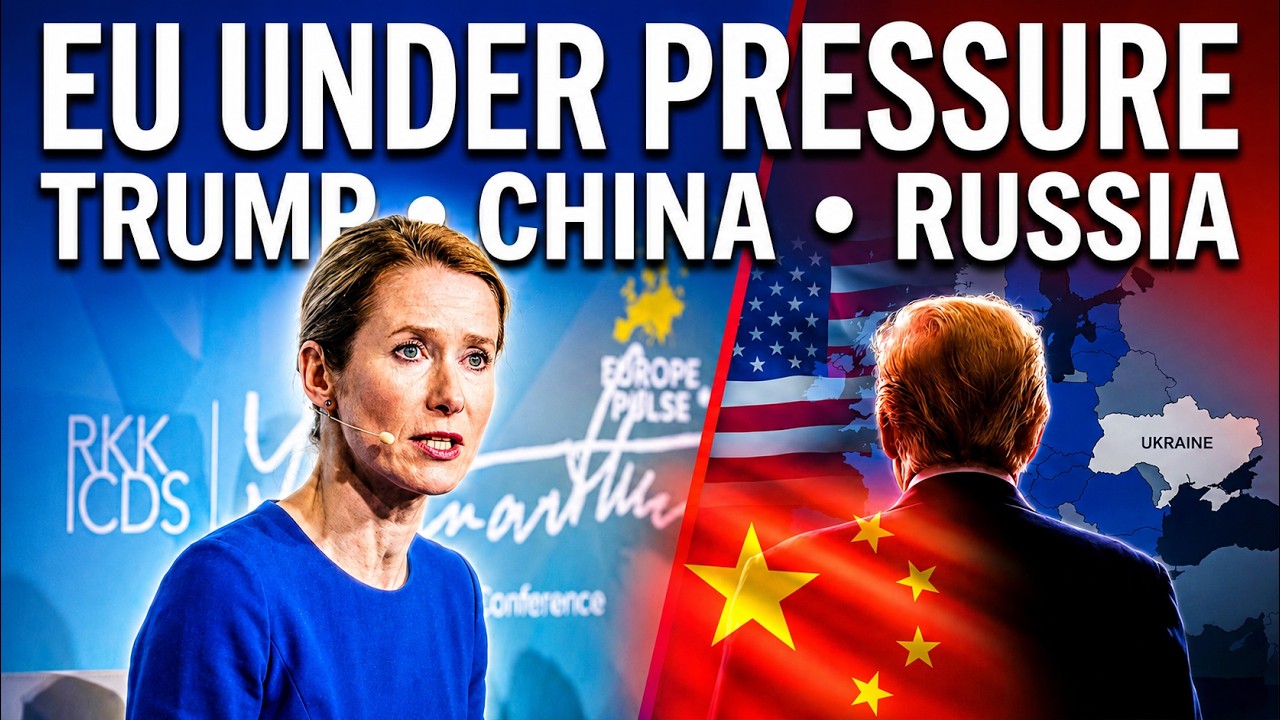
In a candid and revealing interview at the Lennart Meri Conference 2026, EU foreign policy chief Kaja Kallas pulled back the curtain on the complex geopolitical challenges facing Europe, from the war in Ukraine to the looming threats posed by Iran and China. Her surprising anecdote about receiving a Christmas card from Donald Trump served as a poignant backdrop to a discussion laden with stark warnings and strategic insights into a world teetering on the brink of significant shifts.
Kallas didn’t mince words when addressing the Trump administration’s approach to the conflict in Ukraine. She stated the American position has been “very clear”: a push for Ukraine to cede territories it has not lost militarily, including parts of Donbas, in exchange for security guarantees. This, Kallas argued, is a dangerous precedent. “Washington cannot simply ‘deliver Ukraine’ to Russia,” she stressed, emphasizing that any lasting peace deal must have the full acceptance of Ukrainian society. For Europe, the challenge is not merely negotiation but maintaining sustained pressure on Moscow until Russia acknowledges that Ukraine and Europe are the true arbiters of Ukraine’s future.
The Strait of Hormuz: A Global Economic Time Bomb
Beyond Ukraine, Kallas highlighted the perilous implications of the escalating Iran crisis, particularly the potential closure of the Strait of Hormuz. She warned that such an event could trigger a global economic and humanitarian catastrophe. While Europe would undoubtedly face soaring energy prices, Kallas underscored that the impact on Asia and Africa would be even more severe. She cited Sudan, where a staggering 54% of fertilizers reportedly transit through the Strait of Hormuz. “If fertilizer supplies are blocked today,” she cautioned, “the result could be famine next year.” Kallas firmly stated that military escalation against Iranian infrastructure would not solve the Hormuz problem; rather, it would likely exacerbate an already critical pressure point.
China’s Economic Coercion: Morphine vs. Chemotherapy
Perhaps the most compelling metaphor of the interview came when Kallas addressed China’s economic coercion. Europe, she observed, has accurately diagnosed the “disease” but remains divided on the “cure.” Instead of implementing robust countermeasures against unfair practices, many EU nations are resorting to increased subsidies for their companies. Kallas likened this to “giving morphine to a cancer patient: it reduces pain temporarily, but does not treat the underlying disease.” Her message was unequivocal: without concerted action alongside key partners like the US, UK, Japan, Australia, and Singapore, even affluent European countries risk depleting taxpayer funds while China consolidates its dominance in vital industries.
Strategic Takeaways from a Shifting Geopolitical Landscape
- Ukraine Peace Talks Cannot Be Imposed: Kallas insists that any agreement forced upon Ukraine without public acceptance is doomed to fail in creating lasting peace.
- EU Must Prepare Red Lines: Before engaging in serious negotiations with Russia, Europe needs to define its maximum demands, fallback positions, assemble a clear negotiating team, and maintain pressure on Moscow.
- Women Essential for Durable Peace: Studies suggest peace agreements last longer when women are involved in negotiations, as it helps address and prevent the passing of unresolved trauma to future generations.
- Kosovo and Serbia: Lessons in Unaccepted Peace: The ongoing tensions, exemplified by young Serbian protesters’ reluctance to acknowledge Kosovo’s independence, highlight how historical trauma can undermine peace deals without societal acceptance.
- Europe Needs Stronger Defense Identity: In a “G2 world” dominated by the US and China, Kallas argues that Europe must evolve into a more potent security provider, potentially becoming a crucial third pole in global power dynamics.
- Big Powers Dislike EU Unity: Kallas noted that major global players prefer engaging with individual European nations because a unified EU acts as a formidable, equal power.
- Strait of Hormuz is Iran’s Global Pressure Point: The true threat from Iran extends beyond nuclear concerns to include missiles, cyberattacks, hybrid threats, support for Russia, and control over this vital maritime chokepoint.
- China’s Economic Coercion Requires Global Coordination: The solution to China’s unfair practices demands a united front involving Europe, the United States, Japan, Australia, the UK, Singapore, and Latin American partners.
Kaja Kallas’s interview at the Lennart Meri Conference 2026 paints a vivid picture of Europe’s current predicaments and future imperatives. Her directness serves as a clarion call for strategic autonomy, unity, and a clear-eyed approach to the brutal realities of global power politics. The Christmas card from Trump, while a personal touch, underscores the critical need for Europe to define its own destiny amidst external pressures and internal divisions.