
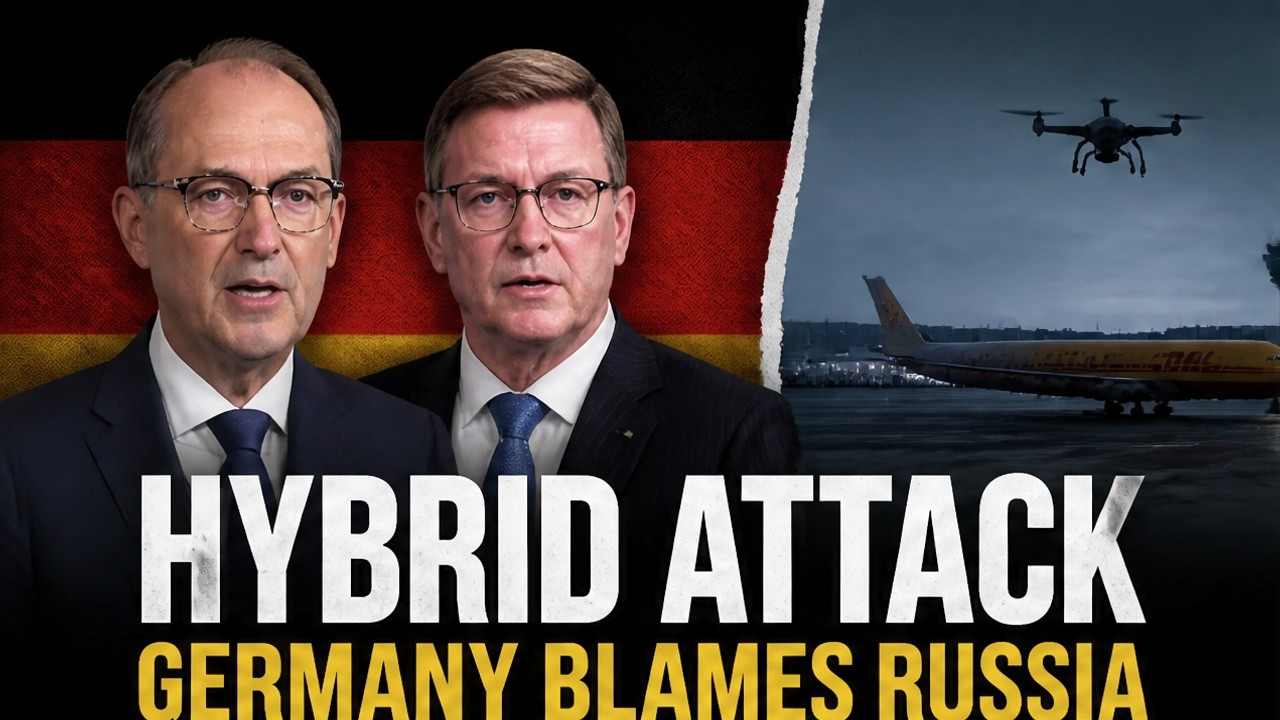
Germany has formally attributed responsibility to Russia for an attempted hybrid attack at Leipzig/Halle Airport on August 4, announcing a series of diplomatic and security measures in response. Interior Minister Alexander Dobrindt and Foreign Minister Johann Wadephul outlined the government’s findings and planned actions, describing the incident as part of a broader pattern of Russian hybrid operations targeting Germany and Europe.
Leipzig Airport Incident and Russian Attribution
On August 4, German authorities discovered drones equipped with explosives and detonation systems within the security area of Leipzig/Halle Airport. These drones were found between Ukrainian cargo aircraft, with reports suggesting another drone may have collided with a DHL aircraft nearby. German media also reported the discovery of a third explosives-loaded drone.
Interior Minister Alexander Dobrindt stated, “The Federal Government therefore concludes that Russia is responsible for the hybrid attack in Leipzig on 4 August.” He explained that investigators examined the drones’ configuration, components, explosives, and ignition technology, finding elements that resemble methods known from other Russian hybrid operations. Police findings, activity patterns, and intelligence assessments led the government to conclude that those involved acted on behalf of Russian state institutions.
Dobrindt emphasized the ongoing threat, stating, “We assume that Germany is the target of further hybrid attacks by Russia.” He added, “We are not at war, but we are a daily target of hybrid warfare.”
Germany’s Diplomatic and Security Response
Foreign Minister Johann Wadephul announced a series of measures in response to the attempted attack. These include the planned closure of the Russian Consulate General in Bonn on September 18 and the termination of the agreement concerning the Russian House in Berlin. Germany also plans to summon the Russian ambassador.
Further proposed actions include new EU listings of Russian individuals linked to hybrid attacks, tighter entry checks for Russian state representatives, and increased pressure on what Wadephul referred to as the Russian Shadow Fleet. He affirmed Germany’s resolve, stating, “Germany has strong partners,” and “We will not be divided or intimidated by Russia’s attacks in our social cohesion.”
The German government is also strengthening its internal security architecture, focusing on drone defence, cybersecurity, intelligence capabilities, and coordination through the National Security Council. Authorities no longer view Leipzig as an isolated incident, anticipating a high risk of further hybrid attacks against critical infrastructure, defence companies, and services supporting Ukraine.
Coordinated European and NATO Response
Germany’s response will be coordinated with its NATO and EU partners, while continuing its civil and military support for Ukraine. NATO Secretary General Mark Rutte, European Commission President Ursula von der Leyen, and EU foreign affairs chief Kaja Kallas have expressed support for Germany or concern over Russia’s alleged involvement.
What happened at Leipzig/Halle Airport?
On August 4, German authorities discovered drones equipped with explosives and detonation systems in the airport’s security area, specifically between Ukrainian cargo aircraft. Germany attributes this attempted hybrid attack to Russia.
What measures is Germany taking against Russia?
Germany plans to close the Russian Consulate General in Bonn on September 18, terminate the agreement for the Russian House in Berlin, and summon the Russian ambassador. Further proposed steps include new EU listings for individuals linked to hybrid attacks, tighter entry checks for Russian state representatives, and increased pressure on the Russian Shadow Fleet.
How does Germany view the broader threat?
German officials view the Leipzig incident as part of a broader pattern of Russian hybrid operations. Interior Minister Alexander Dobrindt stated that Germany is a daily target of hybrid warfare and expects further attacks, including against critical infrastructure and services supporting Ukraine.