
Europe Honors Its Icons – Then Merkel Delivers a Brutal Reality Check
Strasbourg bore witness to a historic convergence of celebration and stern admonition as the European Parliament inaugurated its first European Order of Merit. This new distinction, created to honor those who have profoundly shaped European integration and championed its core values, saw a diverse pantheon of icons recognized. Yet, amidst the tributes, former German Chancellor Angela Merkel seized the moment to deliver an unexpectedly critical, deeply emotional warning about the precarious state of Europe’s future, urging the continent to confront its challenges head-on.
A New Chapter: The European Order of Merit
Marking the 75th anniversary of the pivotal Schuman Declaration, the European Order of Merit was launched as a powerful symbol of appreciation. It acknowledges individuals whose efforts have transcended institutional boundaries, carrying Europe’s message of unity and resilience across the globe. The inaugural laureates represent a rare spectrum of achievement: from political titans like Lech Wałęsa and Angela Merkel herself, to the indomitable spirit of Volodymyr Zelenskyy. They also include figures like Maia Sandu, Javier Solana, Jean-Claude Trichet, and Viviane Reding, alongside humanitarian champion José Andrés, sporting legend Giannis Antetokounmpo, and cultural ambassadors Bono and U2, all embodying the diverse fabric of European excellence.
Roberta Metsola: Europe Was Not Handed to Us
Setting a resolute tone, European Parliament President Roberta Metsola eloquently reminded the chamber of Europe’s arduous journey. She emphasized that the continent’s unity “was not handed to us” but painstakingly forged through a series of treaties, navigated crises, and sustained by immense courage and unwavering solidarity. Metsola framed the Order of Merit as a poignant tribute to those who, at critical junctures, consistently chose cooperation over division, defending Europe’s dream when its very future hung in the balance.
Angela Merkel’s Visionary Warning: Europe’s Three Promises
At the heart of the ceremony was Angela Merkel’s compelling and forthright address. She articulated what she described as the three foundational promises of Europe: peace, prosperity, and democracy. However, her speech quickly pivoted from an acknowledgement of these ideals to a sobering assessment of their current fragility, challenging Europe to reckon with the stark realities threatening each promise.
The Peace Promise Under Threat
Merkel’s warning began with peace, a cornerstone of the European project. She unequivocally stated that after Russia’s brutal war against Ukraine and in light of the evolving security doctrines of the United States, the promise of peace is tragically “no longer guaranteed.” This stark declaration underscored a fundamental shift in the global order, compelling Europe to reassess its defense posture and its role in a more volatile world.
The Unfulfilled Prosperity Promise
Next, Merkel turned her attention to prosperity, arguing that Europe has fallen short of its full potential. She lamented the missed ambition of becoming the world’s strongest knowledge-based economy, a goal crucial for global competitiveness. More critically, she forged a direct link between economic strength, robust climate protection, biodiversity, and Europe’s credibility in the daily lives of its citizens. A failure on one front, she implied, weakens the entire economic and social contract.
Democracy’s Information Crisis: Merkel’s Sharpest Warning
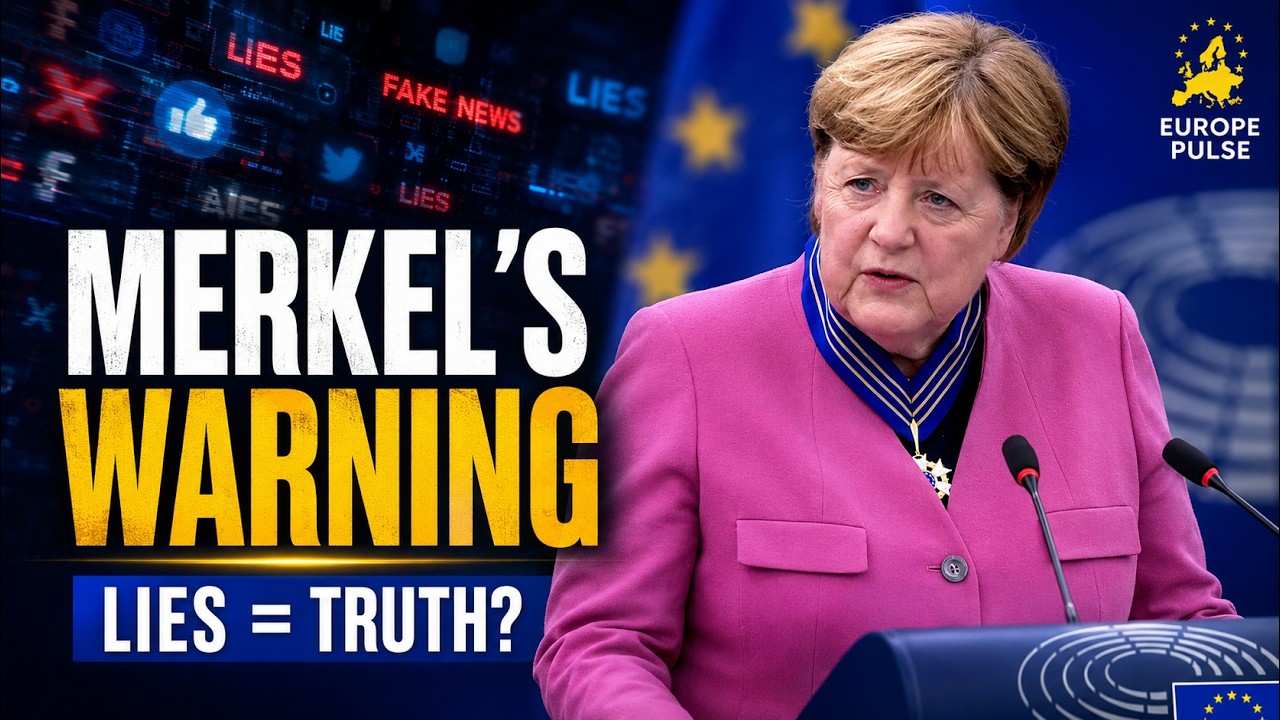
Merkel reserved her most piercing criticism for the state of democracy in Europe. She painted a grim picture of an information crisis where “facts can be dismissed as lies, lies can be presented as truth, and emotions are mixed with reality.” This dangerous erosion of shared understanding, she warned, directly imperils the very foundations of European education and democratic life. Connecting this threat directly to the pervasive influence of social media and the rapid ascent of artificial intelligence, Merkel issued a powerful call to action: the European Union must continue its efforts to regulate AI and steadfastly defend accountability in the public information space, safeguarding the integrity of truth.
A Legacy Honored, A Future Questioned
The ceremony was thus more than a moment of celebration; it was a potent blend of tribute, warning, and a profound question directed at Europe’s next generation. The esteemed laureates, from political leaders to artists and athletes, stand as living testaments to Europe’s past achievements and enduring values. Yet, Merkel’s sobering words cast a long shadow, demanding introspection: can the promises of peace, prosperity, and democracy still be kept in a rapidly changing and increasingly complex world? The answer, she implied, rests on Europe’s willingness to confront its uncomfortable truths and act decisively to protect its foundational principles.
