
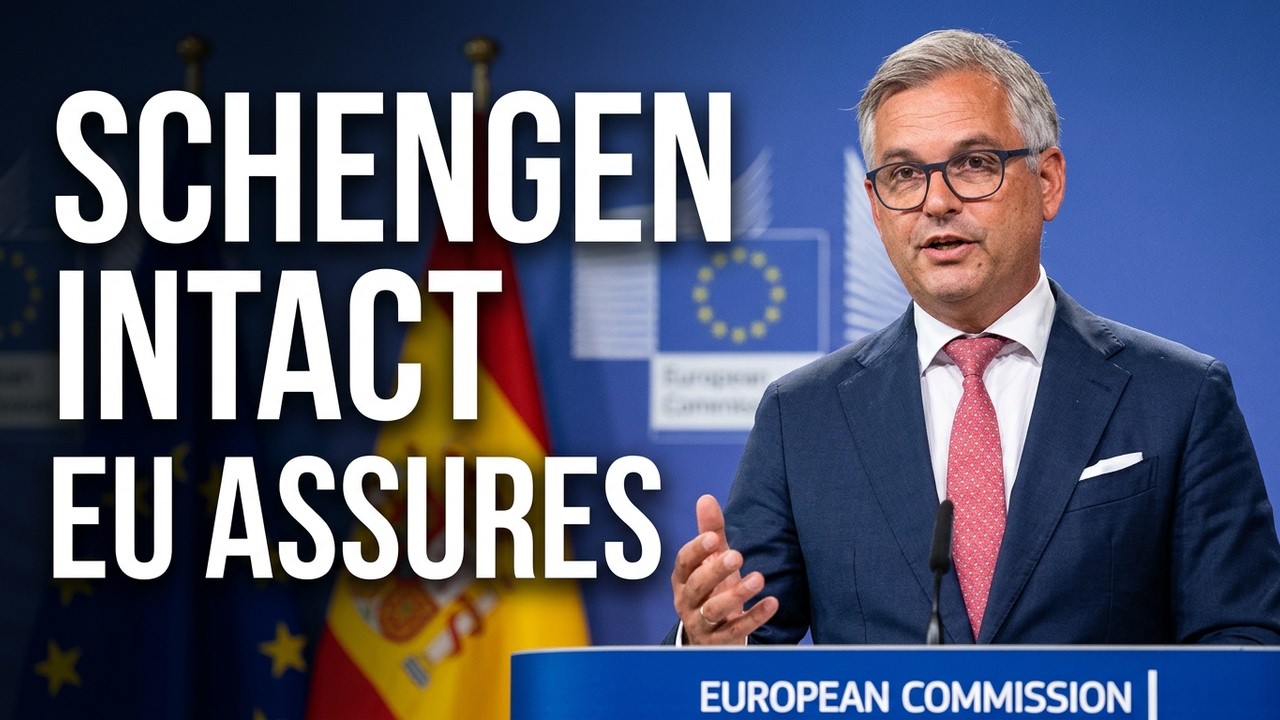
EU interior ministers have expressed full solidarity with Spain, praising its rapid response to an extraordinary migration event in Ceuta that saw tens of thousands of people enter from Morocco within hours. European Commissioner for Internal Affairs and Migration Magnus Brunner confirmed that the integrity of the Schengen area was preserved, as no migrants moved from Ceuta to mainland Spain or continental Europe.
Rapid Response to Ceuta Influx
The crisis saw approximately 72,000 people reportedly enter Spanish territory in Ceuta without permission. Spanish Interior Minister Fernando Grande-Marlaska reported that around 70,000 individuals subsequently returned. Tragically, 75 people lost their lives while attempting to reach Spanish territory during the event.
Commissioner Brunner stated, “There was, of course, full solidarity with Spain around the table,” and added, “When it mattered, the situation was brought back under control.” He highlighted that the events tested Europe’s resilience and the security of its external borders.
Schengen Integrity Maintained and EU Support
Despite the significant influx, Brunner stressed that the Schengen area remained unaffected. “The Schengen area has not been affected,” he affirmed, noting that no individuals from Ceuta proceeded to mainland Spain or other parts of continental Europe. More than 30 Frontex personnel were already operating in Ceuta, providing operational support.
Spain has been offered substantial EU financial assistance, including over €1 billion in funding for the 2021–2027 period. An additional €114 million was allocated through emergency assistance and Union actions, with around €28 million specifically designated to reinforce reception, asylum, and return systems in Ceuta.
Future Migration Policy Discussions
Ministers discussed future European migration policy, agreeing on the need to fully implement the EU’s new migration rules. Key priorities outlined by the Commission include accelerating border procedures and returns, deepening cooperation with partner countries, and strengthening action against migrant-smuggling organisations. The Commission also seeks better monitoring of misinformation trends and stronger early-warning capabilities involving Europol and other EU agencies.
The possibility of creating return centres in third countries was raised by several member states. Brunner noted that the EU has established a legal framework for such arrangements, but negotiations and implementation remain primarily the responsibility of participating member states.
What was the scale of the Ceuta migration event?
Around 72,000 people reportedly entered Ceuta without permission, with approximately 70,000 subsequently returning, according to Spain’s interior minister. Tragically, 75 people died during the attempts.
Was the Schengen area affected by the Ceuta crisis?
No, European Commissioner Magnus Brunner stated that “The integrity of the Schengen area was preserved,” as no migrants moved from Ceuta to mainland Spain or continental Europe.
What future migration policy measures were discussed?
Ministers discussed accelerating border procedures and returns, strengthening cooperation with partner countries, combating smuggling networks, and enhancing early-warning systems against disinformation. The possibility of creating return centres in third countries was also raised.
