
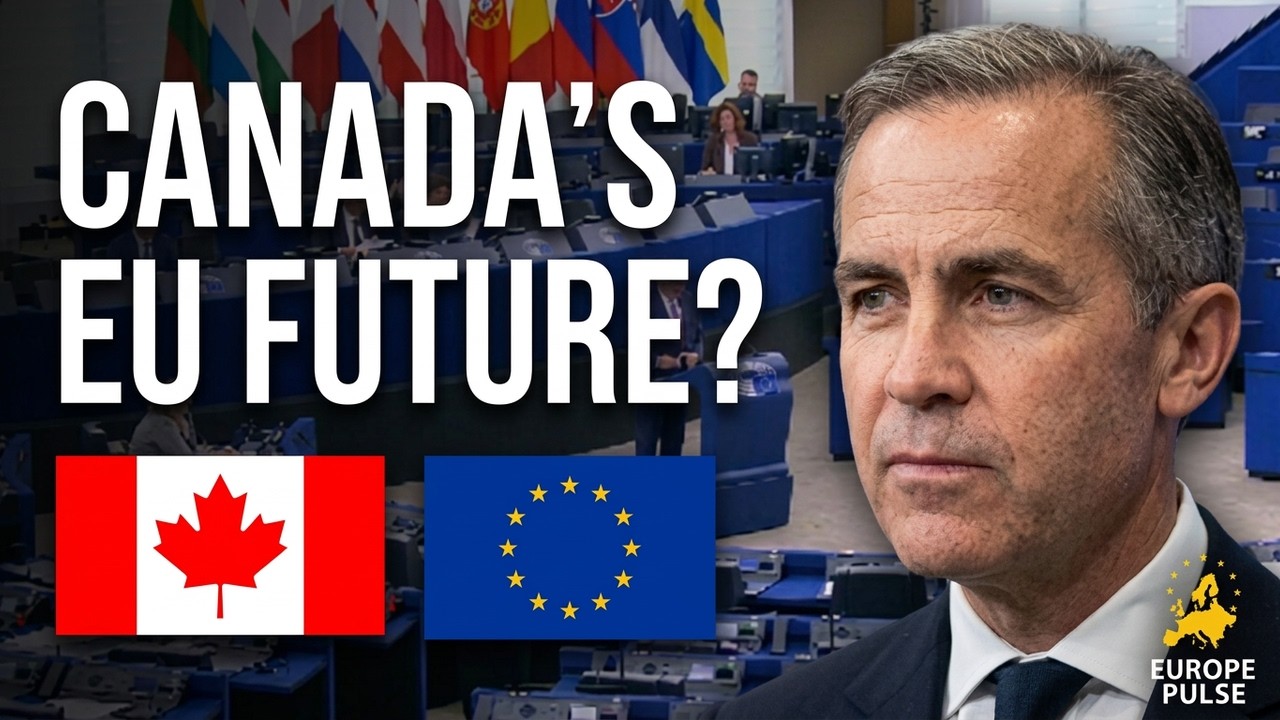
The European Parliament recently debated a significant proposal that could see Canada become the European Union’s first associate member. Ahead of the 21st EU–Canada summit in Montreal, MEPs in Strasbourg discussed an “Alliance for the Future,” following an invitation from Ursula von der Leyen and an address by Canadian Prime Minister Mark Carney. This initiative aims to move beyond the existing EU-Canada Comprehensive Economic and Trade Agreement (CETA) towards a deeper common prosperity and economic-security space.
Exploring Deeper EU-Canada Ties
Commissioner Jozef Síkela outlined the scope of the proposed associate membership, which would involve supply-chain integration through joint investment and regulatory cooperation, the creation of a trusted technology space for research and investment, and coordinated economic-security policies. Síkela highlighted the potential for stronger political ties, building on Canada’s invitations to European Political Community summits and informal Council meetings. He cautioned, however, that “nothing is done until it’s done,” as negotiations remain ongoing and the precise scope of associate membership would be defined over the coming year.
MEPs Debate the Proposal’s Merits and Challenges
The proposal sparked varied reactions among MEPs. Kathleen Van Brempt underscored Canada’s reliability as a partner, stating that “the upcoming summit must deliver on real results” across areas like energy, defence, trade, minerals, and student exchanges, envisioning a wider alliance of middle powers. Jörgen Warborn supported mutual recognition of standards, a transatlantic services market, digital trade, and open procurement, suggesting Canadian resources could help reduce dependence on China.
Conversely, Rihards Kols expressed concerns about a “quasi-member-state label,” advocating for industrial strength. He pointed to Canada’s 34 critical raw materials and €3.3 billion in mineral imports, alongside an 80% Canadian-content ceiling under SAFE, but criticised the slow pace of delivery, citing only one contract—tactical radios for Poland—in six months. Kols also questioned another Canadian LNG feasibility study and demanded delivery on existing agreements, noting CETA’s incomplete ratification after nine years. He asserted that “the delivery gap is real.”
Other MEPs raised specific concerns. Ville Niinistö emphasised the importance of Ukraine, critical infrastructure, Arctic security, indigenous rights, clean industry, workers’ rights, and recycling in any deeper partnership. Elena Kountoura called for fair terms for producers and protection for European geographical indications, specifically Greek feta and Cypriot halloumi. Lynn Boylan, while supporting cooperation, opposed investor courts (ISDS) in CETA and other trade agreements, arguing they undermine sovereignty, climate action, and public services, noting that fossil-fuel companies have won over $80 billion in ISDS awards.
Political and Legal Hurdles
The debate also touched upon the political and legal complexities of such an association. Brando Benifei argued that deeper association would necessitate significant political and legal decisions, potentially including amending Article 49 of the EU Treaty and establishing a specific protocol. Tobias Cremer proposed a comprehensive partnership for a non-European country, encompassing defence-industry integration, Arctic cooperation, easier youth mobility, participation in relevant Council meetings, and a partnership assembly between the European and Canadian parliaments. Veronika Vrecionová urged for concrete opportunities for businesses, students, and workers, moving beyond mere summit photos and promises.
A notable moment occurred when Christine Anderson attacked the proposal, Ursula von der Leyen, and Mark Carney over issues of regulation and censorship, even suggesting another “Freedom Convoy.” Chair Younous Omarjee intervened, calling for respect for Canada’s head of government.
Economic Context and Public Support
Commissioner Síkela provided an economic overview, noting that goods-and-services trade between the EU and Canada rose 80%, from €72.1 billion in 2016 to €130 billion in 2025. He highlighted that nine EU states still need to ratify CETA, welcoming Slovenia’s recent ratification, and mentioned that three states still need to ratify the Strategic Partnership Agreement. Síkela urged MEPs to advocate for ratification in their national parliaments, citing a September poll showing 81% of Canadians support closer integration in trade, travel, work, study, and security, and expressing his belief that most EU citizens would agree.
What is the proposed EU-Canada associate membership?
The proposed associate membership for Canada aims to create a common prosperity and economic-security space beyond the existing CETA trade agreement. It would involve supply-chain integration, regulatory cooperation, a trusted technology space, and coordinated economic-security policies, alongside stronger political ties.
What are the main points of contention among MEPs?
MEPs expressed diverse views, with some advocating for deeper integration in critical areas like energy and defence, while others raised concerns about the pace of existing agreements, the impact of investor courts, and the legal implications of a “quasi-member-state” status.
What is the current status of the proposal?
Associate membership remains a proposal under negotiation. The debate in the European Parliament did not announce EU accession or new mobility rights, and the scope of the partnership would be defined over the coming year.
