
EU Commission Proposes €90 Billion Loan to Cover Ukraine’s Military and Budget Needs for 2026–2027
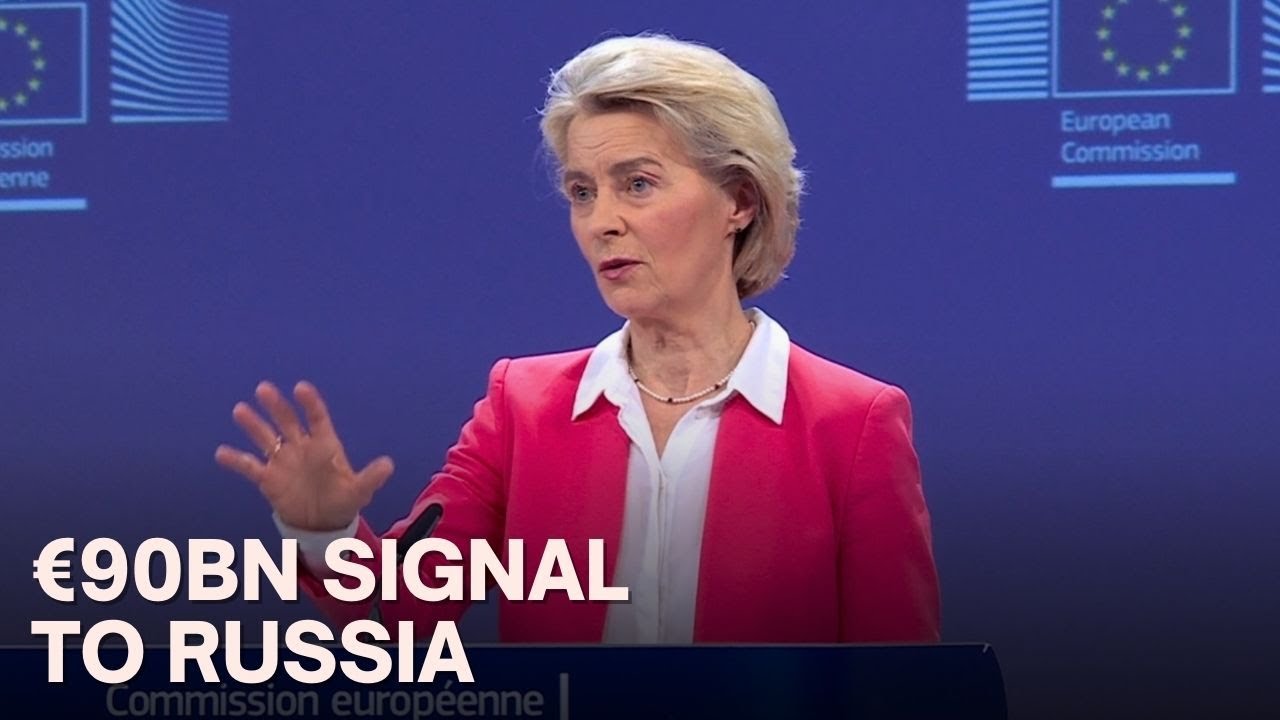
The European Commission has formally proposed a €90 billion loan package to support Ukraine’s military and budgetary needs for 2026 and 2027, marking one of the largest long-term financial commitments since Russia’s full-scale invasion.
Speaking in Brussels, Commission President Ursula von der Leyen said the proposal reflects Europe’s determination to keep Ukraine financially stable and militarily strong as Russia shows “no sign of seeking peace.” She noted that recent Russian strikes over the Christmas period targeted civilians and energy infrastructure, underlining the urgency of sustained support.
The loan, agreed in principle by the European Council in December, will be implemented through enhanced cooperation, with 24 of the EU’s 27 member states participating. Under the proposal, €60 billion would be dedicated to military support, while €30 billion would be allocated to budgetary assistance to keep Ukraine’s state functions and basic public services running.
Military funding will prioritise procurement from Ukraine, the European Union, and EEA-EFTA countries, reinforcing Europe’s defence industrial base. Derogations will be possible only when urgently needed equipment cannot be delivered on time from these regions.
Budgetary support will be conditional on reforms linked to Ukraine’s EU accession path, including rule of law, democratic governance, and anti-corruption measures. Commissioner Marta Kos stressed that reform conditionality is non-negotiable, even during wartime, and highlighted that Ukraine has already completed 63 of 68 reform benchmarks under the existing Ukraine Facility.
Executive Vice-President Valdis Dombrovskis said the funding can be channelled through macro-financial assistance or the Ukraine Facility, both designed to deliver fast, flexible support while enforcing strict conditionality. He added that the package would significantly boost both Ukrainian and European defence industries.
A central political element of the proposal is that Ukraine will only begin repaying the loan once Russia pays reparations for war damage. The Commission confirmed that immobilised Russian assets will remain frozen until the war ends and reparations are paid, and the EU reserves the right to use proceeds from those assets to service the debt.
Interest costs on the loan will be covered by contributions from the 24 participating member states, with longer-term solutions to be discussed in the next EU multiannual financial framework.
The Commission aims for swift approval by the European Parliament and the Council, targeting adoption by early March to allow the first disbursement as early as April. Officials confirmed close coordination with Ukrainian authorities and international partners, including the G7 and the International Monetary Fund, to ensure Ukraine’s financing gap is fully covered.
Commission leaders described the package as a strategic investment in Europe’s own security, warning that the outcome of Russia’s war against Ukraine will shape the future security order of the continent.
——————————————————
*Subscribe to Europe Pulse*
Stay updated with the latest news from Europe
