
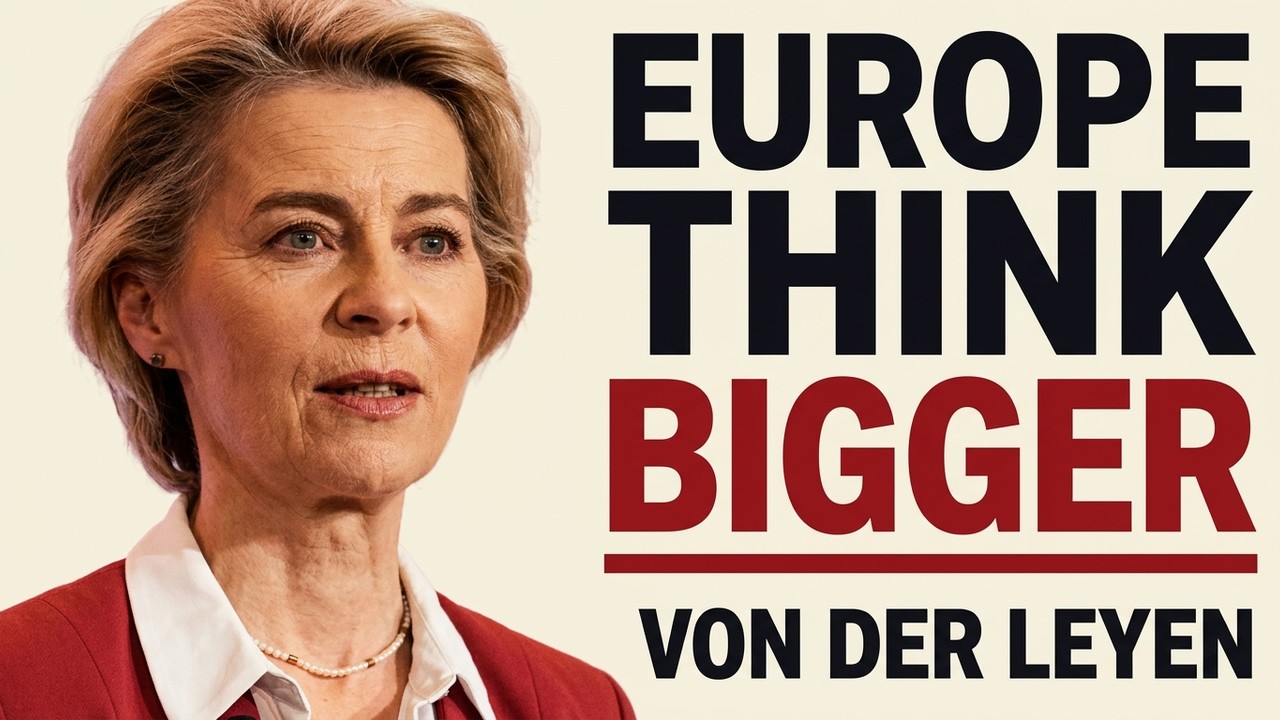
European Commission President Ursula von der Leyen, in her opening keynote at the WINWIN – Brussels Summit 2026, outlined a comprehensive vision for transforming Europe’s scientific prowess into economic growth, new industries, and sustainable jobs. Drawing a parallel to the scientific exchanges of the 1927 Solvay Conference, von der Leyen emphasized Europe’s rich tradition of discovery and the urgent need to translate this talent into real-world commercial success.
Boosting Europe’s Innovation Ecosystem
Von der Leyen highlighted Europe’s inherent strengths, including its world-class universities, research institutions, and a significant share of global clean-technology patents, almost 30%. She also noted that almost one in three quantum companies worldwide is based in the EU. Her message to innovators was clear: scientific leadership must translate into products and services that improve lives, support competitiveness, and create sustainable employment across the continent.
Strengthening the Single Market
A key priority is a stronger single market, serving 450 million people. Von der Leyen presented EU Inc., a proposed “28th regime,” designed as a simpler company framework for doing business across the EU. This framework would allow entrepreneurs to establish a company fully online within 48 hours for less than €100. She urged the European Parliament and Council to preserve the proposal’s ambition, cautioning against burdening it with complexity.
Financing Europe’s Scale-ups
Access to finance remains a critical challenge. European scale-ups typically raise 50% less capital than their counterparts in San Francisco, often compelling them to seek funding across the Atlantic. To address this, von der Leyen described a proposed European scale-up fund, bringing together public and private investors. This fund aims to help promising companies, including those developing reusable spacecraft, efficient AI chips, and radar satellites, expand and remain in Europe. In just two months, the fund has reportedly invested in eight companies, helping them raise close to €5 billion.
Driving the Clean Transition
The clean transition is framed as essential for both climate policy and Europe’s competitiveness and independence. Von der Leyen pointed out that the closure of the Strait of Hormuz added €127 billion to Europe’s fossil-fuel import costs without delivering additional energy, underscoring the vulnerability of dependence on imported oil and gas. She reaffirmed ambitious climate goals: neutrality by 2050 and a 90% emissions cut by 2040, stressing the need for long-term certainty for investors.
To foster clean industrial growth, she highlighted the EU Emissions Trading System (ETS), which has seen emissions in covered sectors fall by around 50% since its inception while the economy grew by 30%. The ETS has generated over €270 billion in revenue, intended for reinvestment in innovation and clean technologies. A planned industrial decarbonisation bank is also set to mobilise €100 billion. The aim is for clean technologies to be developed, manufactured, and used within Europe. Since 2021, over €1.2 trillion has been invested in sustainable EU activities, with the global clean-technology market growing by approximately 20% annually.
Embracing Practical AI Adoption
The final priority focuses on the practical adoption of Artificial Intelligence in the real economy. Examples include AI’s potential to spot faults in industrial machinery before breakdowns and support earlier breast-cancer detection. Europe’s manufacturing expertise, scientific knowledge, and industrial data provide significant advantages. Working with industrial AI envoy Jim Snabe, von der Leyen called for simpler autonomous-vehicle approvals and deployment across the EU after a single approval process, aiming to “move it from the screen to the real world.”
Concluding her address, von der Leyen reiterated, “Europe will stay the course,” emphasizing that “we are building new industries.” She called upon Europe’s scientific talent to harness imagination and build industries that do not yet exist, confident in European capabilities while urging the removal of barriers holding innovators back.
What is the “28th regime” proposed by von der Leyen?
The “28th regime,” or EU Inc., is a proposed simpler company framework for doing business across the EU, allowing online company establishment within 48 hours for less than €100.
What are Europe’s climate targets mentioned in the speech?
Europe aims for climate neutrality by 2050 and a 90% emissions cut by 2040, with a focus on long-term investment certainty for clean industrial growth.
How does Europe plan to boost funding for scale-ups?
A proposed European scale-up fund, bringing together public and private investors, aims to help promising companies expand and remain in Europe, addressing the current challenge of raising less capital than US peers.
