
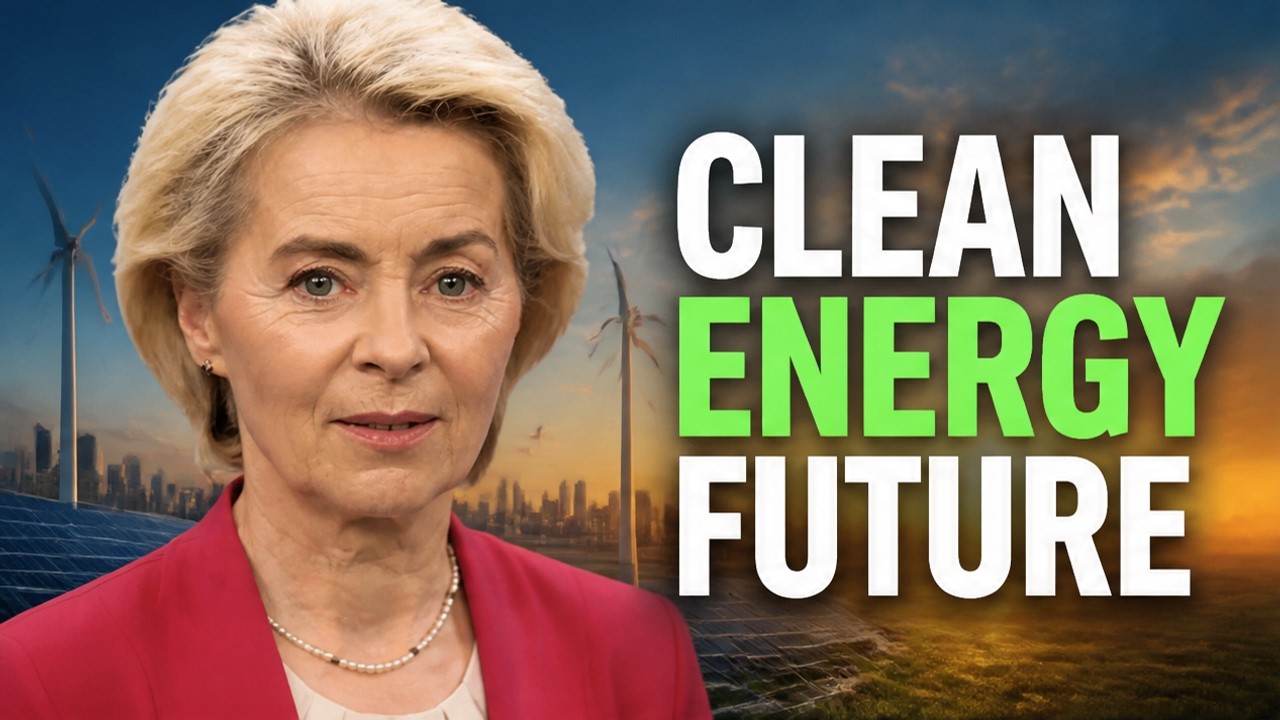
European Commission President Ursula von der Leyen has outlined Europe’s strategy to reduce its vulnerability to fossil fuel price shocks by accelerating the shift toward clean, homegrown energy. Speaking at the ONS Conference, von der Leyen highlighted electrification, stronger grids, clean technologies, and cooperation with Norway as crucial components of Europe’s future energy system.
Accelerating Europe’s Clean Energy Shift
Von der Leyen addressed governments and industry leaders, emphasizing that cooperation has been vital in helping Europe navigate two major energy crises within five years. She pointed to diversified energy supplies with trusted partners, with Norway described as being “at the heart” of these efforts, alongside coordinated actions following past disruptions like the closure of the Strait of Hormuz.
According to von der Leyen, Europe is now moving beyond crisis management towards a more electrified economy. Last year, more than 70% of EU electricity came from clean sources, and for the first time, wind and solar together generated more electricity than all fossil fuels combined. She stated, “As long as Europe remains dependent on fossil fuels, we remain vulnerable.”
EU Electrification Plan and Grid Modernization
The Commission President highlighted proposed measures, including a grids package and an electrification action plan. This plan sets a target for 46% of total energy to come from electricity by 2040. Currently, electricity represents less than one-quarter of final energy consumption. Von der Leyen argued that increasing the use of clean electricity is essential not only for power generation but also across mobility, heating, and industry. She affirmed, “We are accelerating the transition to clean, homegrown energy,” and “We are putting the foundations of an electrified economy in place.”
Strategic Partnerships and Innovation
Cooperation with Norway also extends to clean technology, with carbon capture and storage (CCS) presented as a key example. CO2 captured from industries across Europe is being stored beneath the seabed, with EU support helping to expand the project to store more than 5 million tons of CO2 every year. Von der Leyen’s broader message underscored that Europe should not only utilize the next generation of clean technologies but also design and build them within Europe, linking the energy transition with new industries and competitiveness. She concluded, “This is how we end our exposure to fossil fuel price shocks for good.”
What is Europe’s electrification target?
The European Commission’s electrification action plan sets a target for 46% of total energy to come from electricity by 2040.
How is Europe reducing fossil fuel dependence?
Europe aims to reduce fossil fuel dependence by accelerating the shift to clean, homegrown energy, increasing electrification across sectors, strengthening grids, and developing clean technologies like carbon capture and storage.
What role does Norway play in Europe’s energy strategy?
Norway is described as being “at the heart” of Europe’s efforts to diversify energy supplies with trusted partners and is also a key partner in clean technology cooperation, such as carbon capture and storage projects.
