
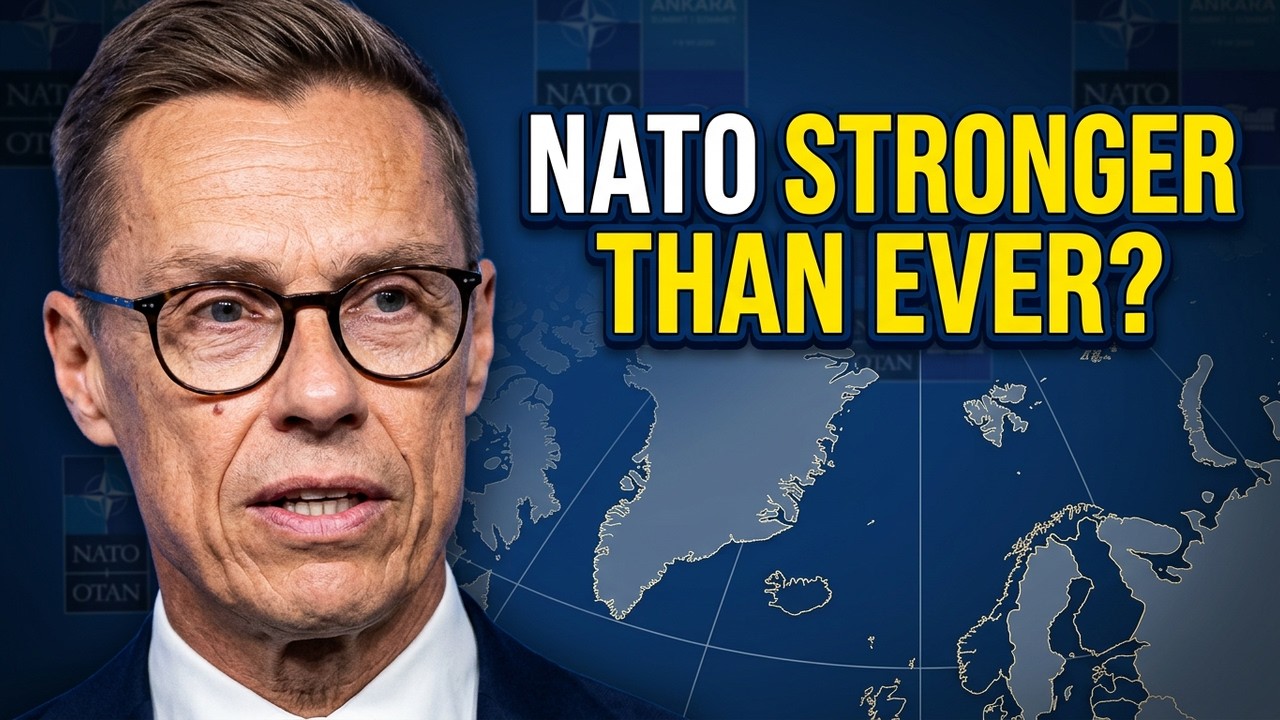
Finnish President Alexander Stubb affirmed NATO’s robust unity at the 2026 NATO Summit in Ankara on 8 July 2026, declaring the alliance to be “stronger than ever.” In a doorstep statement, Stubb addressed a range of pressing security issues, including ongoing support for Ukraine, sustained pressure on Russia, Arctic security, the status of Greenland, defence spending, and the broader security situation surrounding the Strait of Hormuz.
President Stubb underscored the critical importance of maintaining alliance cohesion, stating, “I think it’s very important that the alliance stays intact.” He acknowledged daily disputes and political pressures but stressed that unity must prevail. Regarding Greenland, Stubb clarified that discussions are taking place between Denmark, Greenland, and the United States, while firmly asserting that decisions concerning Greenland remain exclusively “in the hands of the Kingdom of Denmark.”
NATO’s Arctic Capabilities and European Defence
Highlighting NATO’s strategic presence in the Arctic, Stubb noted that seven alliance members possess significant Arctic expertise. He specifically pointed to Finland’s extensive experience, having trained more than one million soldiers in challenging Arctic conditions. Stubb also emphasized the substantial defence capabilities of Finland and Poland, which he described as having some of Europe’s largest militaries. These nations, he added, bear major responsibilities across the Baltic Sea region and NATO’s northeastern and eastern flanks, contributing significantly to the alliance’s collective defence posture.
Ukraine Support and Path to Negotiations
A significant portion of President Stubb’s statement focused on the conflict in Ukraine. He provided an optimistic assessment, indicating that Ukraine is currently performing better militarily, financially, and politically than at any previous stage of the war. This improvement, he suggested, is linked to Ukraine’s enhanced long-range drone and missile capabilities, which have enabled strikes on critical energy infrastructure and oil refineries within Russia.
Stubb reiterated calls for continued and robust military support for Ukraine, specifically advocating for additional Patriot missiles and air-defence systems. He argued that sustained pressure on Russia is essential until Moscow demonstrates a willingness to negotiate. Despite the ongoing conflict, Stubb maintained that a ceasefire remains “the best available outcome” for resolving the hostilities.
Addressing the prospects for peace, Stubb expressed his belief that Russia is unlikely to end the war solely due to economic difficulties or military casualties. He posited that negotiations would become more probable when Russian public opinion begins to turn decisively against the war. His message to the international community was clear: “My message is to continue the pressure and then get to the negotiating table.”
Diplomacy and Regional Stability Concerns
The Finnish President confirmed that ceasefire diplomacy is a subject of constant discussion among international leaders. He referenced recent talks with several key figures, including President Recep Tayyip Erdoğan, President Volodymyr Zelenskyy, President Emmanuel Macron, Ursula von der Leyen, and António Costa. However, Stubb cautioned against immediate optimism, stating that he was “not highly optimistic about achieving immediate results at the summit.”
Beyond the immediate European security context, Stubb also touched upon global stability, expressing hope that the Strait of Hormuz would remain open. He further hoped that a stated 60-day ceasefire will hold and that ongoing negotiations involving Iran and the United States would continue, underscoring the interconnectedness of global security challenges.
What is President Stubb’s view on NATO’s current strength?
President Stubb stated at the 2026 NATO Summit that he believes the alliance is “stronger than ever,” despite daily disputes and political pressures.
What did Stubb say about Greenland’s security discussions?
Stubb confirmed that discussions regarding Greenland are occurring between Denmark, Greenland, and the United States, but stressed that decisions concerning Greenland remain solely “in the hands of the Kingdom of Denmark.”
What is Stubb’s strategy for achieving peace in Ukraine?
President Stubb advocates for continued military support for Ukraine, particularly air-defence systems, and sustained pressure on Russia. He believes negotiations are more likely when Russian public opinion shifts against the war, and reiterated, “I still think the best solution is to go for a ceasefire.”
Watch the full Europe Pulse video
The related Europe Pulse video is available below.
