
Britain Divided: Starmer’s EU Pivot vs. Farage’s Reform Earthquake
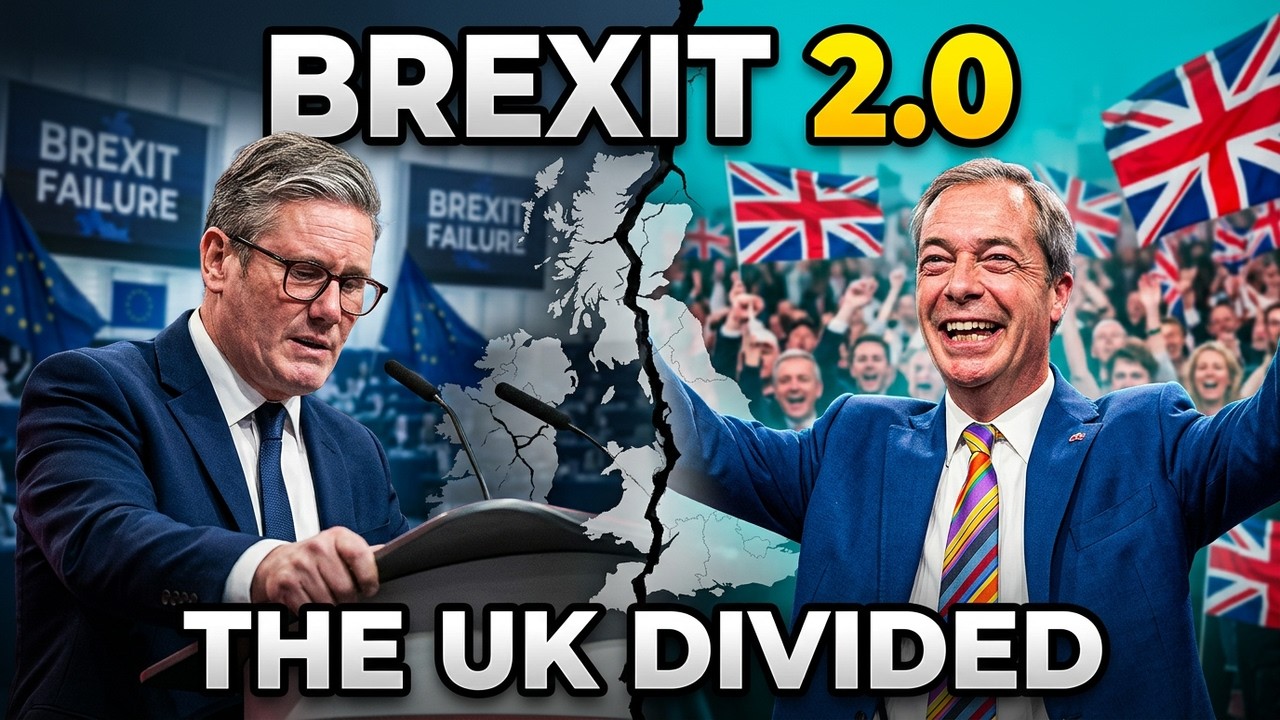
The United Kingdom finds itself gripped by a political drama of unprecedented scale, simultaneously facing two starkly contrasting realities that expose a nation deeply divided. On one side, a beleaguered Prime Minister Keir Starmer grapples with the fallout of devastating local election losses, admitting voter frustration while desperately trying to steer Britain back towards Europe. On the other, Nigel Farage, leader of Reform UK, revels in a historic electoral triumph, declaring a new political order and mocking the established parties.
Starmer’s Desperate Gamble: Blaming Brexit, Embracing Europe
Wounded by brutal local election results in May 2026, Prime Minister Keir Starmer addressed the nation, acknowledging the electorate’s deep-seated frustration. Yet, his speech quickly pivoted from an admission of failure to a direct attack on Brexit’s legacy. Starmer unequivocally stated that Brexit had made Britain “poorer, weaker, and failed to cut migration,” setting the stage for a dramatic policy reset. His vision is clear: Labour must return Britain to the “heart of Europe” to bolster the country’s standing on trade, security, defence, and seize new opportunities for its citizens. This proposed UK-EU reset aims to mend fences and rebuild crucial relationships, a significant shift from previous stances.
Domestic Agenda and Leadership Under Siege
Beyond the European pivot, Starmer announced a bold domestic agenda designed to rekindle national pride and economic stability. Central to this plan is the dramatic legislation for the full national ownership of British Steel, a move aimed at fortifying Britain’s industrial backbone. He also pledged a stronger industrial strategy, significant investment in apprenticeships and technical education, and the introduction of a new youth mobility-style arrangement with the EU, reminiscent of the popular Erasmus scheme. However, the Prime Minister’s attempts to articulate his new direction were repeatedly overshadowed by a barrage of questions from journalists, challenging him on whether he should resign in the wake of Labour’s devastating losses. Whispers of a Labour rebellion and concerns for his political survival dominated the post-speech discourse, casting a long shadow over his ambitious proposals.
Farage’s Resurgent Reform UK: A Seismic Shift
As Starmer fought for his political life, a triumphant Nigel Farage celebrated an astounding breakthrough for Reform UK. From Essex to the Red Wall constituencies, across the North East, Yorkshire, Wales, and even deep into traditional Tory heartlands (the Blue Wall), Reform UK claimed to have utterly destroyed the dominance of both Labour and Conservative parties. Farage, charismatic and unapologetic, wasted no time in mocking Starmer’s struggles and launching scathing attacks on the Conservatives, whom he declared to be obsolete. With an air of unshakeable confidence, Farage proclaimed Reform UK as the new patriotic force in British politics, a party truly representing the will of the people. His celebratory address concluded with a bold prediction: Keir Starmer, he asserted, would be gone by summer, signaling an imminent change at the very top of British governance.
Implications: A Nation Reshaped, Europe Watching
The events of May 2026 have undeniably triggered a political earthquake across the United Kingdom. The contrasting fortunes of Starmer and Farage highlight a profound schism within the nation: one faction seeking reintegration with Europe to address Brexit’s perceived failures, and another championing a staunchly independent, nationalist future. Reform UK’s historic ascendance marks a significant challenge to the two-party system, fundamentally reshaping British politics. The calls for Starmer’s resignation and the visible erosion of Labour’s traditional support, coupled with the Conservative Party’s struggle against Reform’s surge, paint a picture of deep uncertainty. For Europe Pulse, the implications are clear: Britain’s future relationship with the EU, its economic trajectory, and its very political identity now hang in a delicate balance, making the upcoming months critical for both Westminster and Brussels. The political landscape of Britain, irrevocably altered, demands close attention from across Europe.
