Rutte in European Parliament: Europe Cannot Defend Itself Without the US, NATO Chief Says
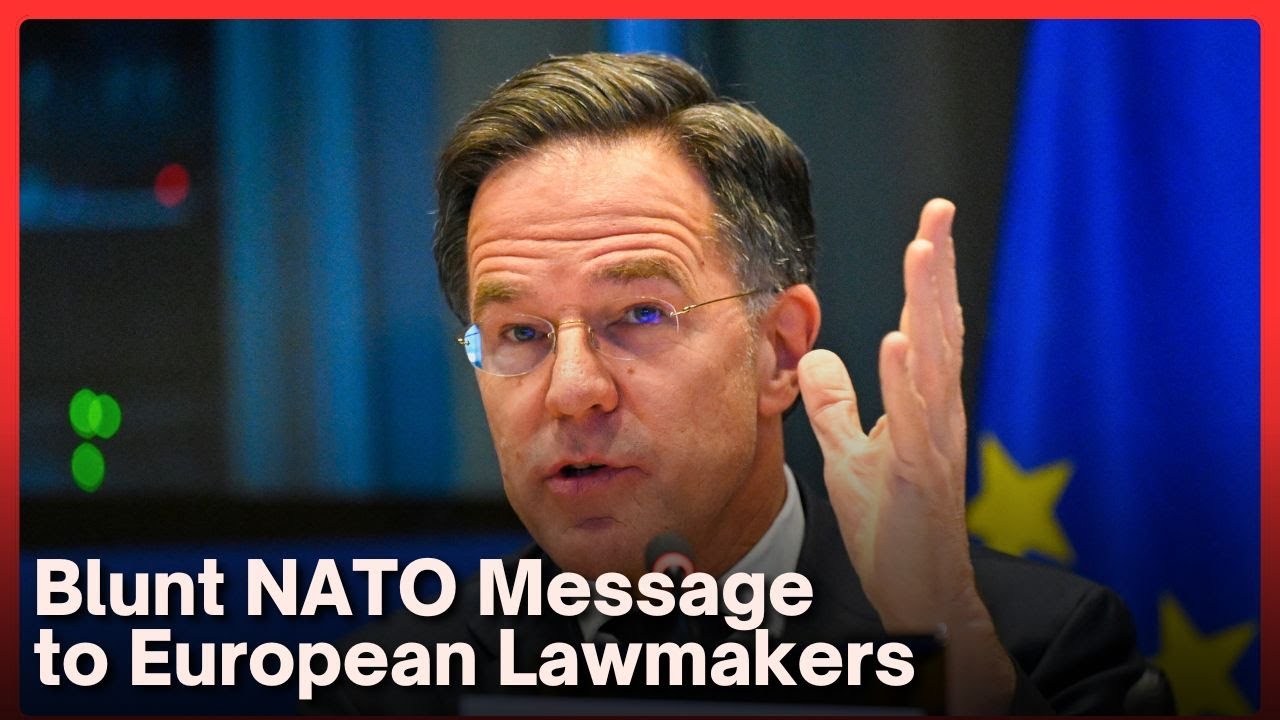
NATO Secretary General Mark Rutte delivered one of his most direct and uncompromising messages yet during a heated hearing in the European Parliament, warning lawmakers that Europe cannot defend itself without the United States and dismissing ideas of full European strategic autonomy as unrealistic.
Speaking before parliamentary committees, Rutte faced tough questioning from MEPs on defence spending, transatlantic relations, Greenland, and Arctic security. His responses were sharp, factual, and at times deliberately provocative, underlining what he described as the hard realities of NATO’s security architecture.
Rutte Praises Trump’s Pressure on NATO Defence Spending
Rutte openly credited former US president Donald Trump with accelerating NATO defence spending commitments across Europe and Canada. He said the long-standing target of spending 2% of GDP on defence would “never, ever” have been reached by all allies without sustained pressure from Washington.
According to Rutte, countries such as Spain, Italy, Belgium, and Canada would not have moved from around 1.5% to 2% of GDP without US insistence. He also argued that the more recent NATO commitment to spend up to 5% of GDP — combining core defence, resilience, and industrial capacity — would not have emerged without American pressure.
Rutte stressed that when US leaders “do good stuff,” he is willing to say so, even if it irritates critics in Europe.
“Europe Alone Is a Fantasy,” NATO Chief Warns
One of the most striking moments came when Rutte dismissed claims that Europe could defend itself without the United States. He warned that such a move would not only be politically destabilising but also financially unrealistic.
According to Rutte, even spending 5% of GDP would not be enough for Europe to replace US military capabilities, including intelligence, logistics, and nuclear deterrence. He said a fully independent European defence would likely require defence spending closer to 10% of GDP and the creation of an independent nuclear capability — at enormous cost.
He warned that abandoning the US nuclear umbrella would mean losing “the ultimate guarantor of our freedom.”
US Commitment to NATO and Article 5
Rutte rejected suggestions that the United States is distancing itself from NATO. He said Washington remains fully committed to NATO and to Article 5, the alliance’s collective defence clause.
At the same time, he acknowledged that US frustration over unequal burden-sharing has existed since the Eisenhower era. He said the latest NATO spending commitments are finally addressing that imbalance and easing a long-standing irritant in transatlantic relations.
Germany, Canada, and Eastern Allies Highlighted
Rutte pointed to Germany as a leading example, noting that German defence spending is set to rise dramatically compared with previous years, moving toward 3.5% core defence spending by the end of the decade.
He also praised Canada for returning to the 2% target, committing to the longer-term 5% framework, and remaining a major supporter of Ukraine.
Countries on NATO’s eastern flank — including Poland and the Baltic states — were cited as already meeting or approaching the highest spending levels within the alliance.
Greenland and the Arctic Take Centre Stage
A significant portion of the hearing focused on Greenland and rising tensions in the Arctic. Rutte outlined what he described as two agreed “work streams” following recent high-level discussions.
The first is a NATO-led effort to strengthen collective defence in the Arctic among the seven NATO Arctic states, including the United States, Canada, Denmark, Norway, Iceland, Finland, and Sweden. The goal is to prevent Russia and China from expanding military and economic influence in the region as sea routes open due to climate change.
The second track is a diplomatic process involving the United States, Denmark, and Greenland, following talks in Washington. Rutte stressed that he has no mandate to negotiate on Denmark’s behalf and will not be involved in that process.
Arctic Security Becomes a NATO Capability Priority
Rutte confirmed that Arctic defence requirements will increasingly be integrated into NATO’s capability planning process. He said allied leaders, including Denmark’s prime minister, have pressed for Arctic security to be treated as a core NATO issue rather than a regional concern.
He also noted that US leaders, including Trump during his first term, had already flagged Arctic security as a strategic issue — a view Rutte said has now become unavoidable due to growing Russian and Chinese activity.
A Defining Debate for Europe’s Security Future
The exchange in the European Parliament exposed a widening divide between advocates of European strategic autonomy and those who argue that NATO’s transatlantic foundation remains indispensable.
Rutte’s message was clear: Europe and North America need each other, and any attempt to weaken that bond would come at a high strategic and financial price. As defence spending rises and Arctic tensions intensify, the debate over Europe’s security future is set to remain at the centre of EU and NATO politics.