
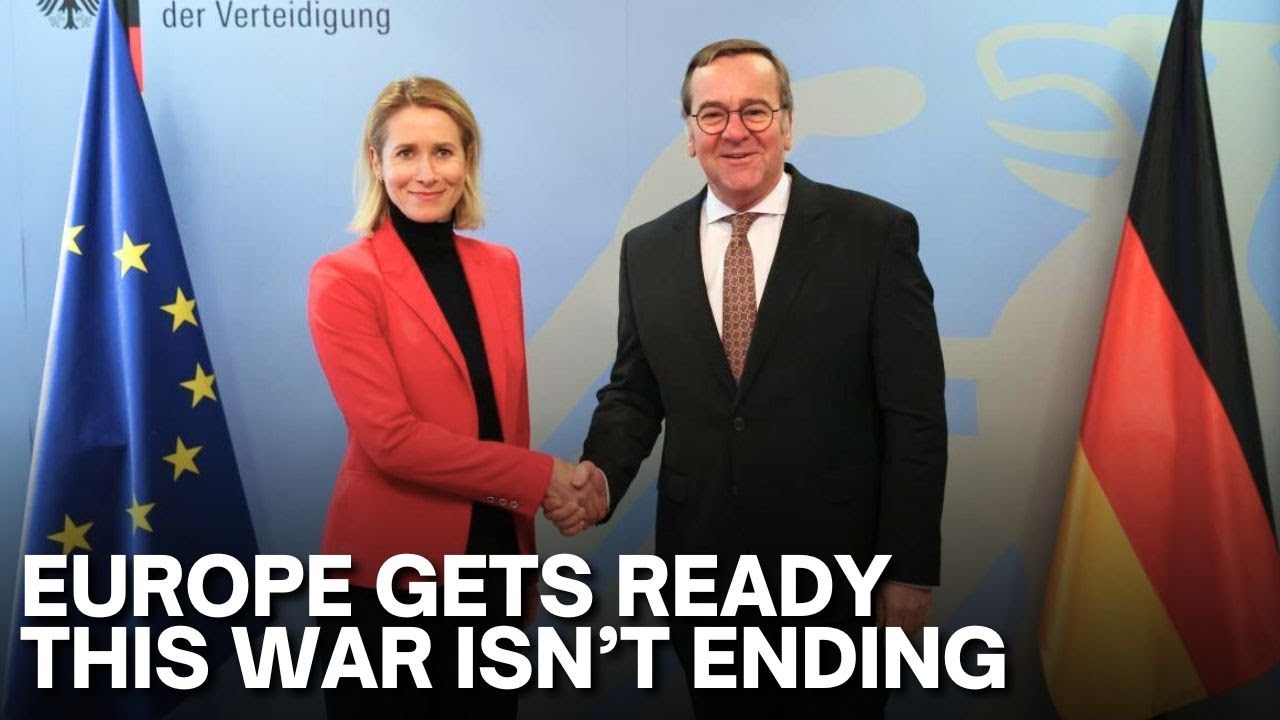
“Diplomacy is not enough. Europe has openly acknowledged that it must prepare for a scenario in which Russia refuses to end the war.”
European leaders said that while diplomatic efforts continue, Moscow is showing no willingness to move toward peace. Instead, Russia is intensifying its military pressure, especially through sustained air attacks on Ukraine’s civilian and energy infrastructure.
Speaking at the German Ministry of Defence, Germany’s Defence Minister Boris Pistorius said Russia continues to strike Ukraine nightly, deliberately targeting energy facilities during winter, leaving millions without reliable electricity and heat. He said these attacks show that President Vladimir Putin is not interested in a ceasefire.
Pistorius stressed that despite discussions about future security arrangements, a ceasefire is currently “not in sight.” Nevertheless, he said Europe must prepare now for the possibility of one — while at the same time preparing for a prolonged conflict.
Germany confirmed that it will provide 11.5 billion euros in military support to Ukraine this year. A key priority, according to Pistorius, is air defence, as Russia continues to rely heavily on missile and drone strikes.
He also warned that Ukraine will need around 60 billion dollars in international support in 2026 alone to maintain its ability to defend itself. Bilateral aid, he said, will not be sufficient.
That is why the European Union plans to make 90 billion euros available through loans in 2026 and 2027, funding both Ukraine’s state functions and its defence. European leaders emphasized that this support must be closely linked with cooperation between Ukrainian and European defence industries, to speed up deliveries and strengthen long-term capabilities.
EU foreign policy chief Kaja Kallas praised Germany’s leadership in European defence, calling it the largest military contributor to Ukraine and a central pillar of NATO’s presence across Europe.
Kallas said there is currently an intense diplomatic push for peace, but described it as “one-sided.” While diplomacy continues, she said, Russian bombs remain Moscow’s response.
She confirmed that the European Union is moving forward with a 20th sanctions package against Russia, aiming to finalize it next month. According to Kallas, increased pressure is necessary if Russia is to take negotiations seriously.
Beyond Ukraine, the talks in Berlin also focused on Europe’s broader security environment — particularly the Arctic and the North Atlantic.
Pistorius warned that Russia’s ambitions go beyond Ukraine, pointing to Moscow’s growing military presence in the Arctic. He said securing northern sea routes is critical for NATO, as they are essential for transatlantic supply lines between Europe and the United States.
Germany confirmed it is intensifying its presence in the region through naval deployments, surveillance flights, exercises with allies, and closer coordination with Denmark, Norway, Canada, and the United States. Any future mission, officials said, would take place within a NATO framework.
The officials also addressed strained transatlantic relations. Kallas described the United States as an indispensable ally, while acknowledging that relations are not as strong as they once were. She said Europe has no intention of abandoning decades of cooperation, stressing that Europe and the U.S. remain stronger when acting together.
Finally, both leaders addressed Iran, condemning the regime’s violent crackdown on protests. Kallas said the European Union is considering additional sanctions, while stressing that any political change must ultimately come from within Iranian society.
The message from Berlin was consistent and clear.
Europe is not abandoning diplomacy — but it is no longer relying on it alone.
Instead, European leaders are preparing for the possibility that Russia will continue the war, and they are reshaping security, defence, and sanctions policy accordingly.
——————————————————
*Subscribe to Europe Pulse*
Stay updated with the latest news from Europe.
