Europe is entering the final stage of drafting its peace framework for Ukraine after a day of intensive diplomacy led by President Volodymyr Zelenskyy. During high-level talks in London and subsequent consultations in Brussels, European leaders sought to align their positions before presenting a unified proposal to the United States.
According to Zelenskyy, the European plan should be completed by Tuesday evening, marking a pivotal moment in Western coordination ahead of expected U.S.–Russia mediation efforts. Kyiv remains firm that no territorial concessions can be part of any agreement.
London Meetings: Europe Works Toward One Unified Peace Position
In London, Zelenskyy met with UK Prime Minister Keir Starmer, French President Emmanuel Macron, and German Chancellor Friedrich Merz. The leaders used the session to narrow differences, assess the U.S. proposals currently on the table, and establish what Europe considers acceptable conditions for future negotiations.
Starmer reaffirmed that any ceasefire must be “just and lasting” and that decisions about Ukraine must be made with Ukraine, not around it. His message reinforced the long-standing Western principle that Ukraine must shape its own security arrangements.
Zelenskyy described the talks as “very sensitive” and emphasized that certain elements of the peace process require American involvement, while others depend fundamentally on European unity. He also confirmed that recent U.S. drafts include roughly 20 proposed points, but none resolve the issue of territorial control — an area where Ukraine refuses compromise.
Macron highlighted the leverage Europe holds through military support, sanctions, and Ukraine’s continued resilience on the battlefield. Merz noted that the coming days may prove decisive, expressing caution regarding parts of the U.S. documentation while underscoring Germany’s unwavering support for Kyiv.
Zelenskyy later stated that Europe is working on several interconnected documents, including a peace framework, security guarantees, and plans for post-war reconstruction. Air defense, energy security, and coordinated pressure on Russia remain immediate priorities.
Brussels Follow-Up: NATO and the EU Close Ranks
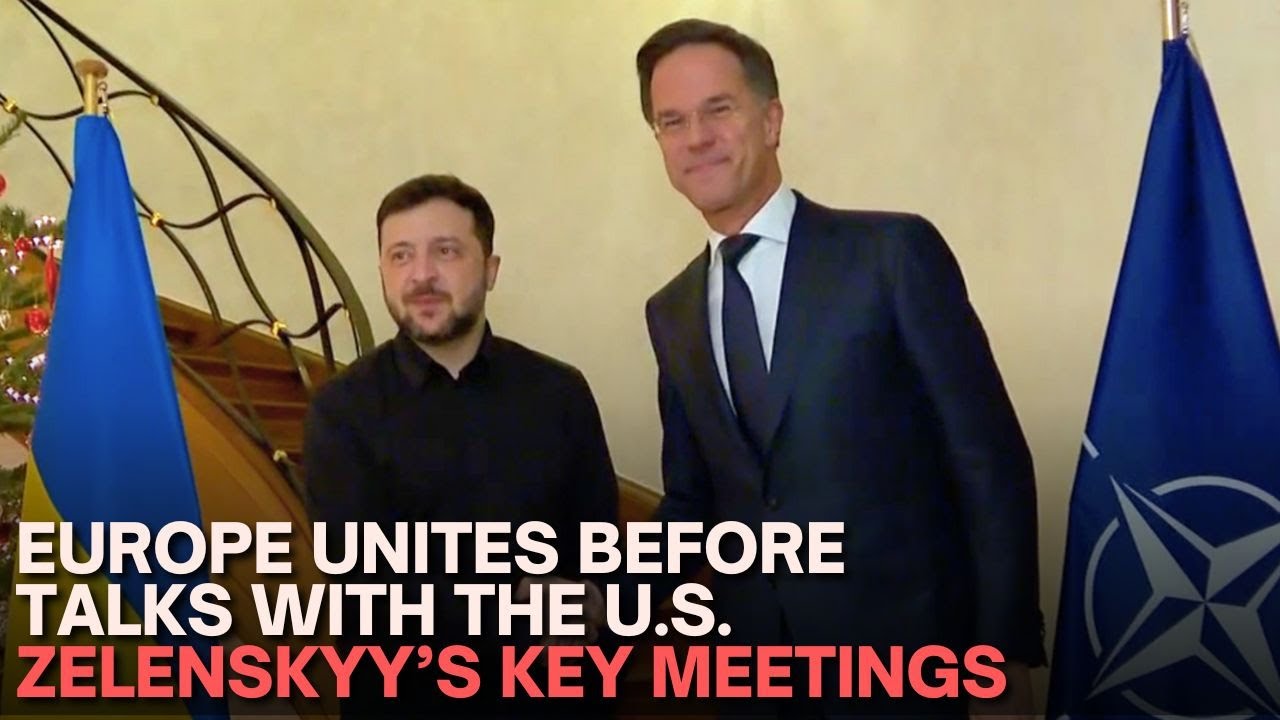
From London, Zelenskyy travelled directly to Brussels for consultations with NATO Secretary General Mark Rutte, European Commission President Ursula von der Leyen, and
European Council President Antonio Costa.
These meetings focused on three strategic goals:
- Aligning NATO and EU positions with the emerging European peace proposal.
- Securing commitments for air-defense systems and energy support ahead of winter.
- Coordinating the Coalition of the Willing, which Kyiv expects to form the backbone of Europe’s long-term security architecture.
Brussels thus served as the second, equally critical step in ensuring the West presents one coherent negotiating position before the peace documents are formally delivered to Washington.
Why Europe’s Peace Plan Matters Now
The accelerated timeline reflects growing pressure on all sides:
- The United States is exploring ways to mediate a framework that could halt Russia’s full-scale invasion.
- Europe wants its own strategic interests represented and refuses a U.S.–Russia deal agreed “over Europe’s head.”
- Ukraine needs guarantees that any ceasefire will be durable, enforceable, and will not reward territorial aggression.
For Kyiv, unity between Europe, the United States, and NATO is now a decisive factor shaping the battlefield and the diplomatic landscape.
What Comes Next
If Zelenskyy’s timeline holds, the European plan will reach Washington within hours of completion. The next phase will involve aligning with U.S. negotiators and assessing whether Moscow is prepared to engage meaningfully.
Until then, Western coordination remains the cornerstone of Ukraine’s strategy — and Zelenskyy’s rapid London–Brussels diplomacy underscores just how crucial this alignment has become.