
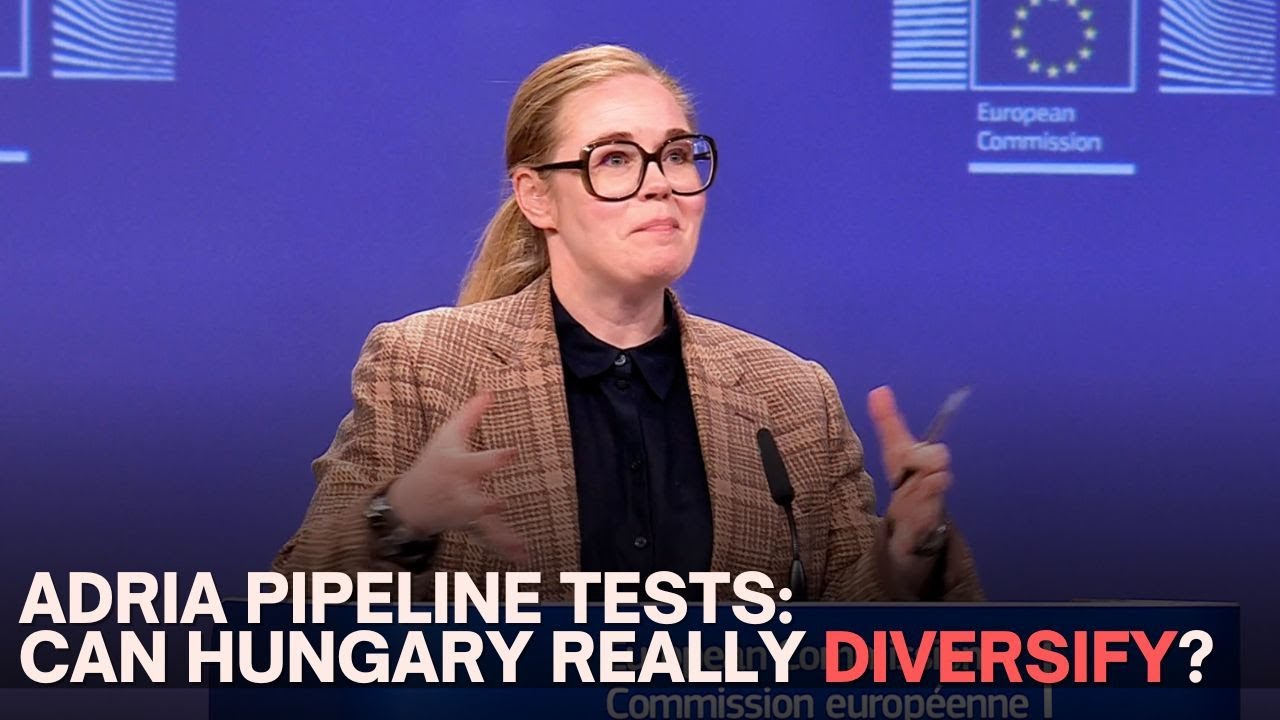
EU Commission: Capacity Tests Underway to Help Hungary and Slovakia Shift from Russian Oil via Adria Pipeline
#EU #EuropeanCommission #Hungary #Slovakia
At a Brussels press conference, European Commission spokesperson Anna-Kaisa Itkonen addressed questions on Hungary and Slovakia’s continued reliance on Russian oil. She confirmed the Commission is “informed about the ongoing capacity tests” involving MOL—Hungary’s refinery owner—and JANAF, Croatia’s Adria pipeline operator. The stated purpose of these tests is to increase use of the Adria oil pipeline to help both Hungary and Slovakia diversify away from Russian crude. Itkonen said this objective aligns with the EU’s REPower goals. She emphasized that the Commission does not comment on disputes between member states or their companies, but stands ready to facilitate discussions if needed. The Commission’s role, she added, is to ensure that the REPower plan presented three years ago, and related legislation presented in June, are implementable by member states.
Pressed on conflicting public claims—Budapest saying the Adria/JANAF route lacks capacity, Zagreb insisting capacity is sufficient—Itkonen declined to arbitrate. She reiterated that capacity tests are still ongoing and the Commission remains in close contact with operators and national counterparts. The remarks frame the issue as a technical and regulatory process rather than a political clash. For Slovakia and Hungary, the Adria pipeline is a critical alternative route that could reduce dependence on Russia while maintaining refinery supply. The Commission’s facilitation offer suggests Brussels aims to smooth coordination among capitals and companies.
Itkonen underlined that increasing flows via Adria would directly support diversification, a core pillar of the EU’s energy security strategy. She noted that the Commission seeks practical solutions to help member states implement agreed objectives. The briefing included no numbers on current or projected pipeline throughput, pending the outcome of tests. No timeline was offered for completion. By staying neutral on competing national statements, the Commission signaled it will rely on technical results rather than rhetoric. The broader context is the EU’s multi-year push to cut fossil fuel imports from Russia and fortify supply chains. For landlocked refineries in Hungary and Slovakia, pipeline flexibility remains essential. The takeaway from Brussels: testing first, conclusions later—but the policy direction is clear. The EU wants more barrels through Adria if the system can handle it, and it stands ready to broker talks to make that happen.
——————————————————
*Subscribe to Europe Pulse*
Stay updated with the latest news from Europe.
#EuropePulse #BreakingNews #EU #WorldNews #Politics #TrendingNow #NewsUpdate #Analysis #Ukraine #Russia #USA #UK #EuropeanUnion #NATO #WorldEvents #CurrentAffairs #EUnews #TopStories #InternationalNews #Brussels #Leaders #ViralNews #Headlines