
Germany’s Foreign Minister Calls for “Justice, Peace, Respect” in UN Speech Linking Einstein’s Story to Global Crises
#Germany #UN #UNGA #JohannWadephul #Einstein
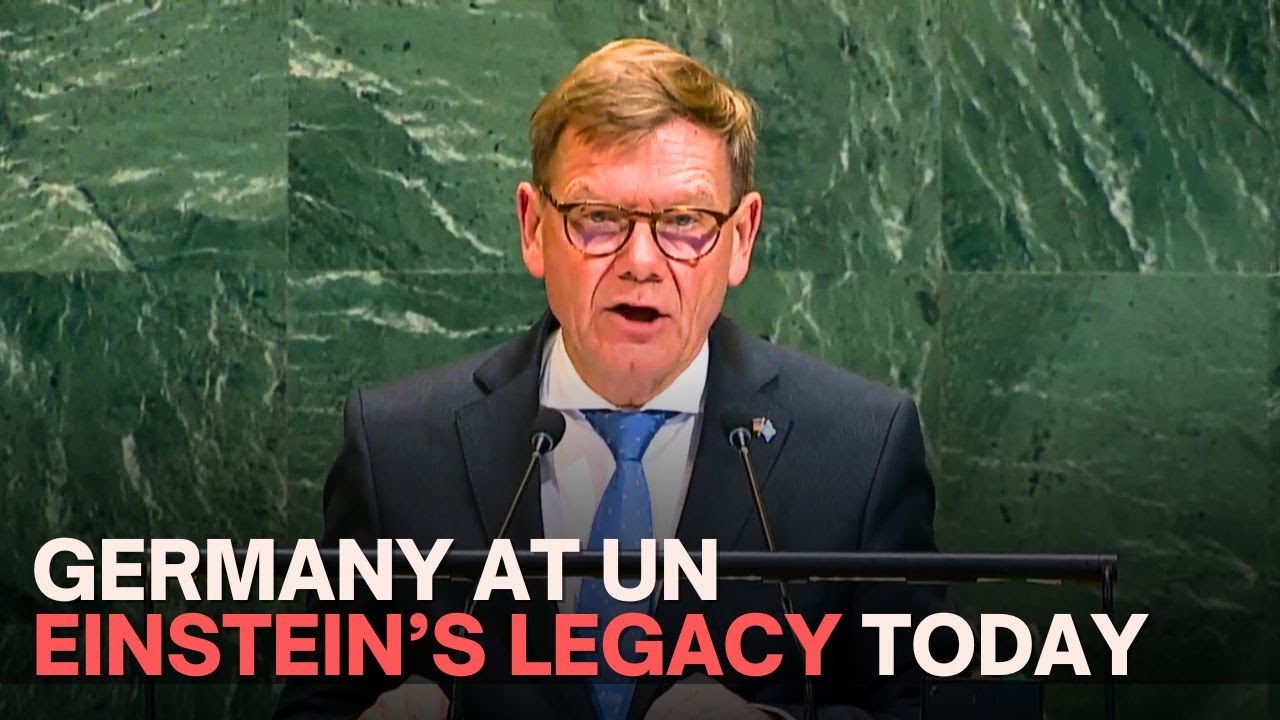
At the United Nations General Assembly, German Foreign Minister Johann Wadephul delivered a wide-ranging speech that wove together history, humanitarian crises, and Germany’s global commitments. He opened with the story of Albert Einstein’s departure from Germany in 1932, a powerful reminder of the dangers of authoritarianism and the loss of human dignity. Wadephul noted that Einstein never returned to Germany after the Nazis seized power, drawing a line between that historical tragedy and the founding values of the United Nations.
The minister reaffirmed Germany’s gratitude for the international order created after World War II, but stressed that responsibility now lies with member states to strengthen the UN. He announced Germany’s candidacy for a non-permanent seat on the Security Council for the 2027–2028 term, pledging that Berlin will focus on three principles: justice, peace, and respect.
Addressing current global crises, Wadephul pointed to Sudan, where more than 30 million people need humanitarian aid, and the war in Gaza, which he described as “hell on earth” and a humanitarian nightmare. He called for the release of hostages, reaffirmed Israel’s security as part of Germany’s raison d’état, and urged progress toward a two-state solution.
He condemned Iran for arming proxy forces and continuing a nuclear program that exceeds civilian needs. Wadephul confirmed that Germany supported triggering the “snapback” of UN sanctions on Tehran while leaving the door open to renewed negotiations.
Turning to Europe, he denounced Russia’s war of aggression against Ukraine as a blatant violation of the UN Charter. He declared Germany’s support for creating a special tribunal for crimes of aggression and pledged continued aid to Ukraine and displaced civilians. He also warned of growing challenges from climate change, pollution, and biodiversity loss, stressing that climate justice must be part of global security efforts.
Germany, he said, is already the UN’s second-largest financial contributor, one of the largest humanitarian donors, and a leading supporter of peacekeeping. German forces currently serve in 14 UN missions, from Lebanon to South Sudan. Berlin also chairs the UN Peacebuilding Commission, underlining its long-term commitment to strengthening civil societies and preventing conflict.
Wadephul emphasized the need for UN reform, particularly expanding Security Council seats for Africa, Asia, and Latin America. He argued that only by adapting can the UN remain fit for purpose in the 21st century.
Concluding, he pledged that Germany’s candidacy offers more than words—it is an offer to listen, to cooperate, and to act. “Justice, peace, respect,” Wadephul said, “that is Germany’s offer to each and every nation here. It is an offer you can always count on—now and in the future.”
00:00 – Einstein Leaves Germany & The UN’s Founding Lessons
02:03 – Germany’s UNSC Bid; Sudan Crisis & Gaza “Hell on Earth”
03:35 – Iran Proxies, Nuclear Program & Sanctions Snapback (Diplomacy Open)
04:36 – Russia’s Aggression, Planetary Crises & Germany’s Pillars: Justice–Peace–Respect
08:50 – Germany’s UN Contributions, Tribunal for Ukraine, UN Reform & Closing Message
——————————————————
*Subscribe to Europe Pulse*
Stay updated with the latest news from Europe.
#EuropePulse #BreakingNews #EU #WorldNews #Politics #TrendingNow #NewsUpdate #Analysis #Ukraine #Russia #USA #UK #EuropeanUnion #NATO #WorldEvents #CurrentAffairs #EUnews #TopStories #InternationalNews #Brussels #Leaders #ViralNews #Headlines
